June 25, 20268 min read
Primitivo di Manduria: why this Apulian wine hits so hard and who it suits
Dark, dense, 14 % and up. Primitivo di Manduria is not a wine for timid sipping. Here is where it comes from, how it tastes, and what to open it with so it shows its best.
You pour a glass and you see it straight away. An almost opaque dark purple that stains the side of the glass. You smell it - plum, cherry jam, something like dried figs. The first sip is warm, almost sweet, and the label says 14.5 %. Sometimes 15.
This is Primitivo di Manduria. A wine from the heel of the Italian boot that has quietly been taking over European tables for the last ten years. It is not a wine for Friday night sipping in front of the telly, it is a wine for food, for meat, for winter.
Let us go through where it came from, why Manduria in particular differs from any old Primitivo, and when to open it so that you get not just its power but its fruit as well.
What Primitivo actually is
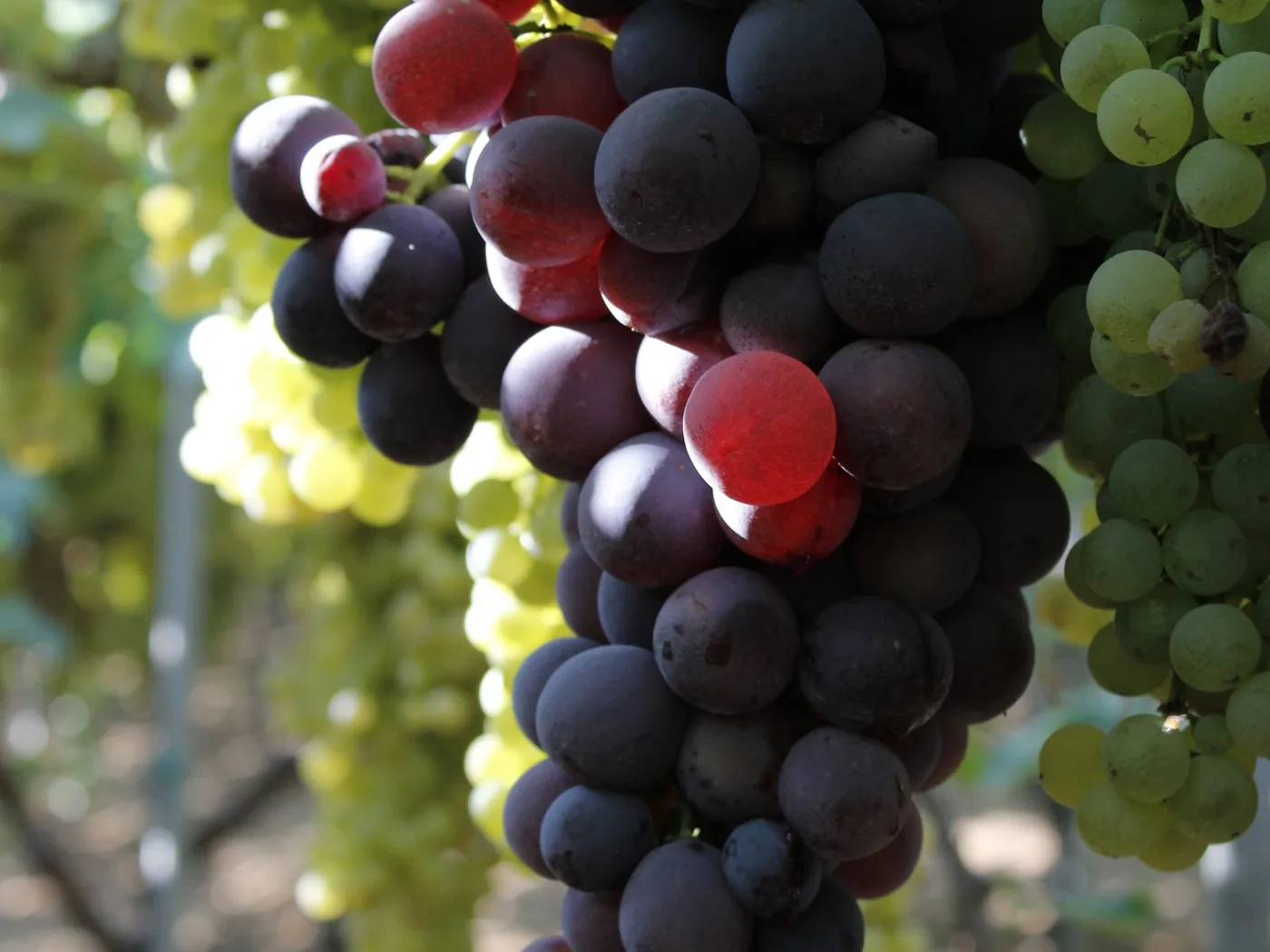
Primitivo is a red grape grown mainly in Apulia, the region in the heel of Italy. The name comes from the Latin primativus, meaning early, because it ripens a few weeks before most other varieties.
A genetic curiosity: Primitivo is the same variety as Californian Zinfandel and Croatian Tribidrag. Three names, one vine. In Apulia, though, thanks to the fierce sun and the old bush vines, it gives a wine that is hard to imitate in California.
Manduria is a small town in the province of Taranto, in the Salento area. The most famous protected version takes its name from it: Primitivo di Manduria DOP.
Why Manduria is a different league from ordinary Primitivo
On the shelf you will find two types. One says only Primitivo Puglia IGT, the other Primitivo di Manduria DOP. Those three letters DOP are not marketing, they mean strict rules on origin, yields and minimum alcohol (14 % for the DOP).
The second difference is the vines themselves. Around Manduria there are old vineyards trained in the alberello system, where the vine grows as a low bush with no wires, each plant standing on its own. These old vines give little fruit, but very concentrated fruit. That is where the density in the glass comes from.
There is also Primitivo di Manduria Riserva, which ages longer, at least two years with nine months of that in wood. This is the top version, darker, spicier, with notes of tobacco and cocoa.
How it tastes
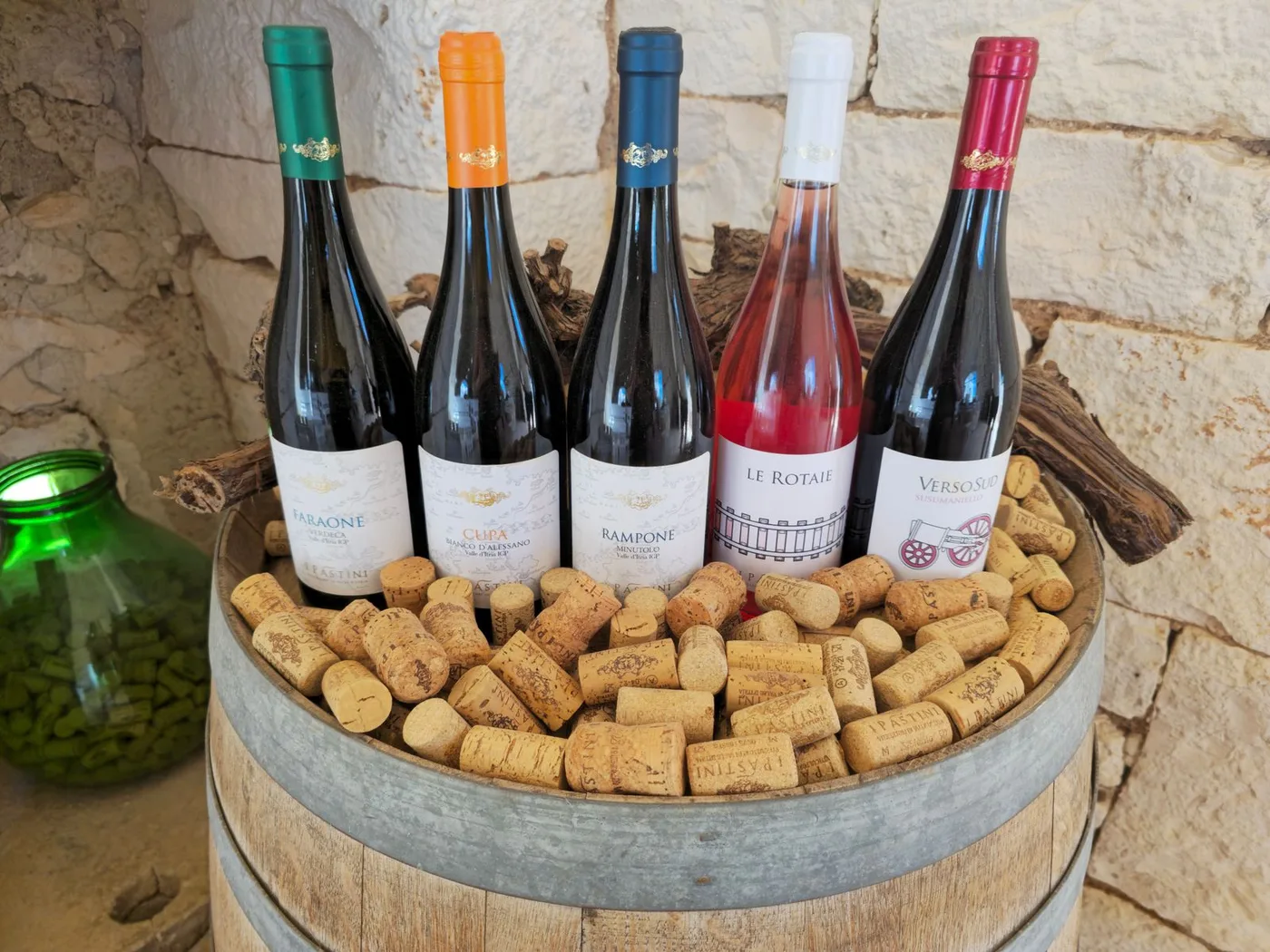
The profile is unmistakable: dark fruit. Plum, black cherry, blackberry, then dried figs and raisins. After the second sip come spice and sweet wood, sometimes a hint of chocolate or vanilla from the oak barrel.
The tannins are soft and rounded, not rough like a young Cabernet. The acidity is low, the body full, the finish long and warming. That combination is exactly what makes Primitivo approachable even for people who normally dislike dry reds.
One thing to watch: because of the high alcohol and residual sugar it can taste almost sweet. That is not a fault, it is the style. If you are after a sharp, acidic, mineral wine, Primitivo is not it.
What to open it with
The full body and soft tannins make Primitivo an ideal partner for substantial food. A short list of what works best:
- Grilled and roast meat - beef steaks, lamb, sausages off the grill.
- Thick sauces and ragù - tagliatelle al ragù, meat braised in red wine.
- Aged hard cheeses - Pecorino, older Caciocavallo, parmesan past 24 months.
- Dark chocolate above 70 % - a surprisingly good match with the Riserva.
- Or on its own - on a winter evening in front of a film it holds up perfectly well with no food at all.
Serving: temperature decides
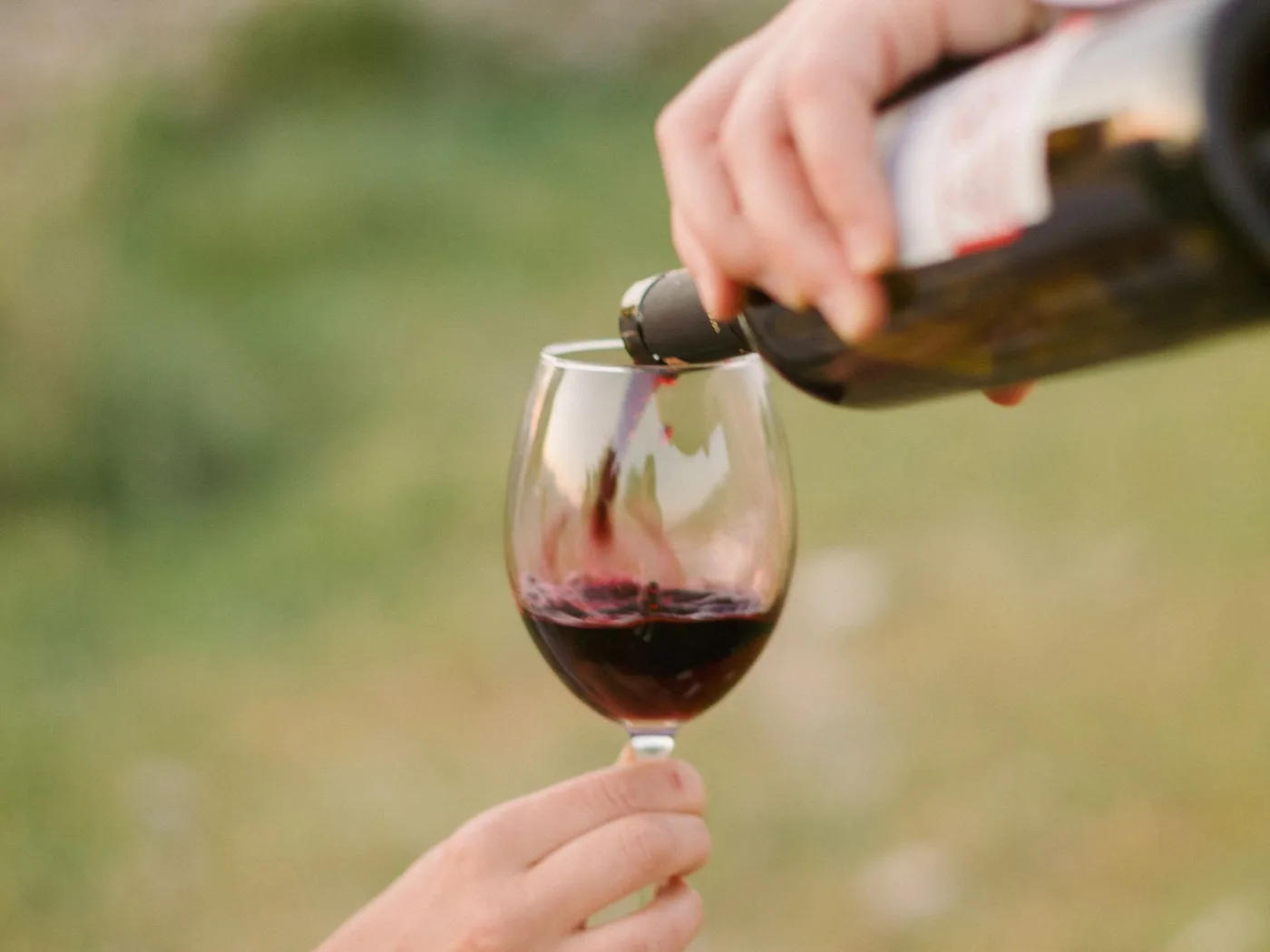
The most common mistake with Primitivo is serving it too warm. At a room temperature of 22 °C the alcohol steps forward and the wine feels heavy, almost burning. The ideal is 16 to 18 °C, roughly 30 minutes in the fridge before you open it.
You do not need to decant a young Primitivo. Pour the Riserva into a carafe at least 30 minutes ahead, the aeration softens the spice and opens up the fruit.
Choose a larger glass with room to swirl. A narrow white wine glass strangles the aroma here.
How to pick a good bottle, and where
Three things on the label: look for the words Primitivo di Manduria DOP (not just Puglia IGT), check the alcohol (good bottles are 14 % and above) and, if you want the densest experience, go for the Riserva.
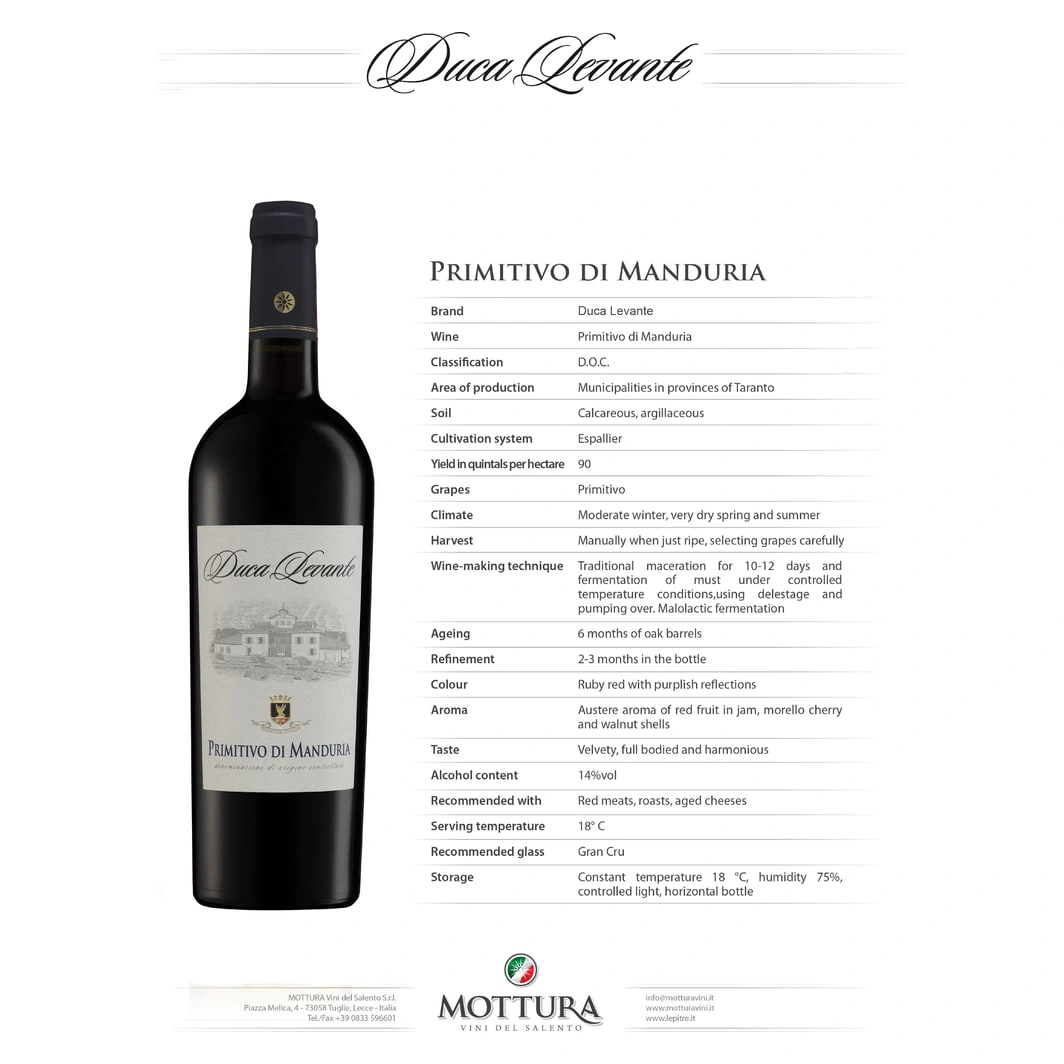
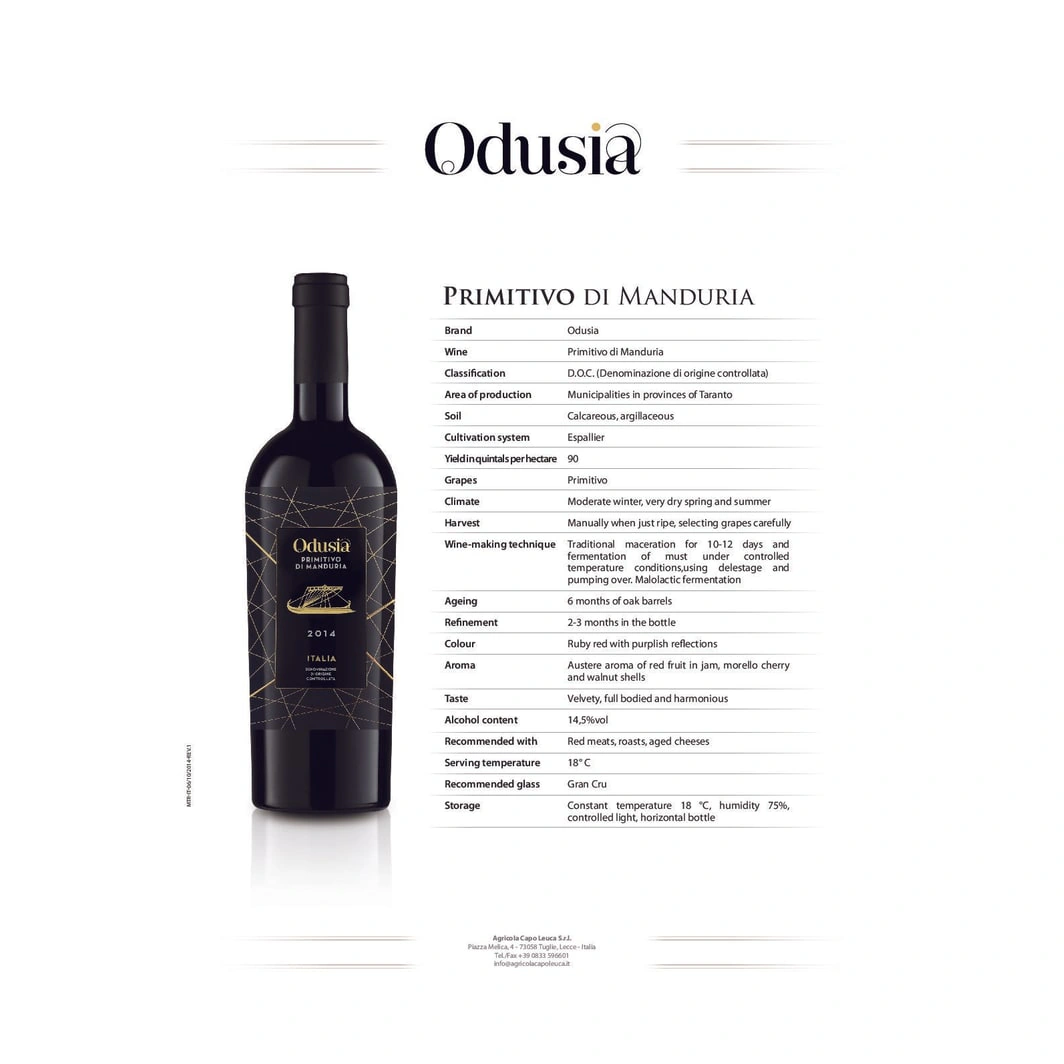
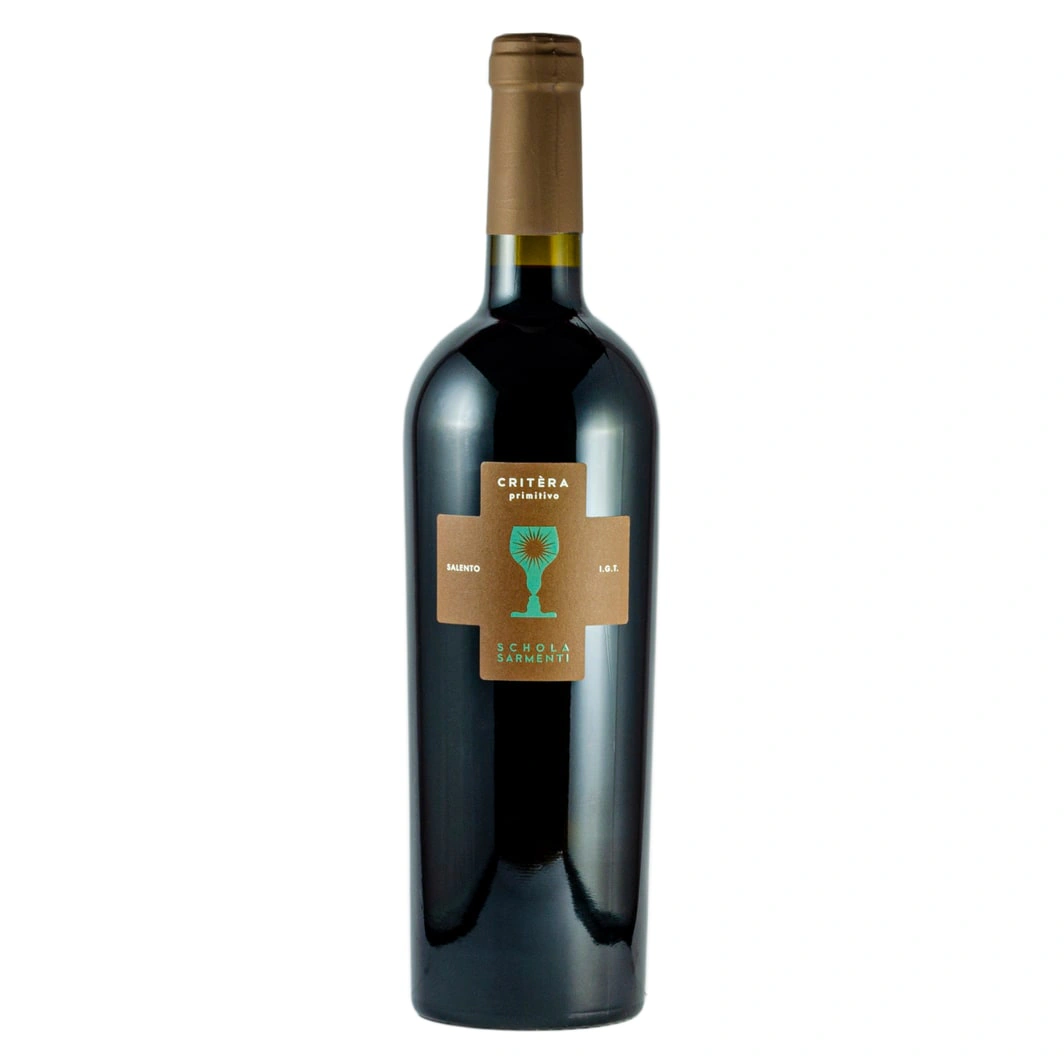
In the Italiamo catalogue you will find Primitivo in the Wine section among the reds, including bottles from the Apulian producer Villa Mottura in Salento, straight from the heart of the area: Primitivo di Manduria, the denser Stillio or Schola Sarmenti Critera. It is direct import, so you know where the wine is from and who made it.
If you cannot decide between several, start with a standard Primitivo di Manduria DOP at around 10 to 14 EUR. Once it wins you over, move up to the Riserva. For most dinners, though, the basic DOP version is exactly what you need.
Frequently asked questions
- Is Primitivo di Manduria a sweet wine?
- The classic Primitivo di Manduria DOP is dry, but the high alcohol and ripe fruit make it seem gently sweet. There is also a separate sweet version, Primitivo di Manduria Dolce Naturale, which really is a dessert wine and says so on the label.
- What is the difference between Primitivo and Zinfandel?
- Genetically it is the same variety. Place and style make the difference: Apulian Primitivo tends to be fuller, riper and spicier thanks to the fierce sun and old vines, while Californian Zinfandel is often fruitier and sometimes higher still in alcohol.
- How long does an opened bottle last?
- Thanks to the full body and higher alcohol, an opened Primitivo holds for two to three days if you cork it and keep it cool. The Riserva often tastes even better on the second day, once the spice settles.