July 2, 20268 min read
Real pesto Genovese: how to spot the good stuff and what to avoid on the shelf
Seven ingredients, nothing else. Real pesto alla genovese is simple, and that is exactly why it is so easy to ruin. A guide to the label that will save you the disappointment.
Turn a jar of pesto around in the supermarket and read the ingredients. If sunflower oil is second or third on the list and cashews stand in for pine nuts, what you are holding is a green spread with very little to do with Genoa.
Real pesto alla genovese is one of the simplest recipes in Italian cooking. Seven ingredients, no cooking, no additives. And that is exactly why it is so easy to cut corners on: every expensive component can be swapped for a cheaper one, and most people never notice.
This guide will teach you to read the label in ten seconds and pick a jar that tastes like Liguria rather than a factory.
Seven ingredients, and not one more
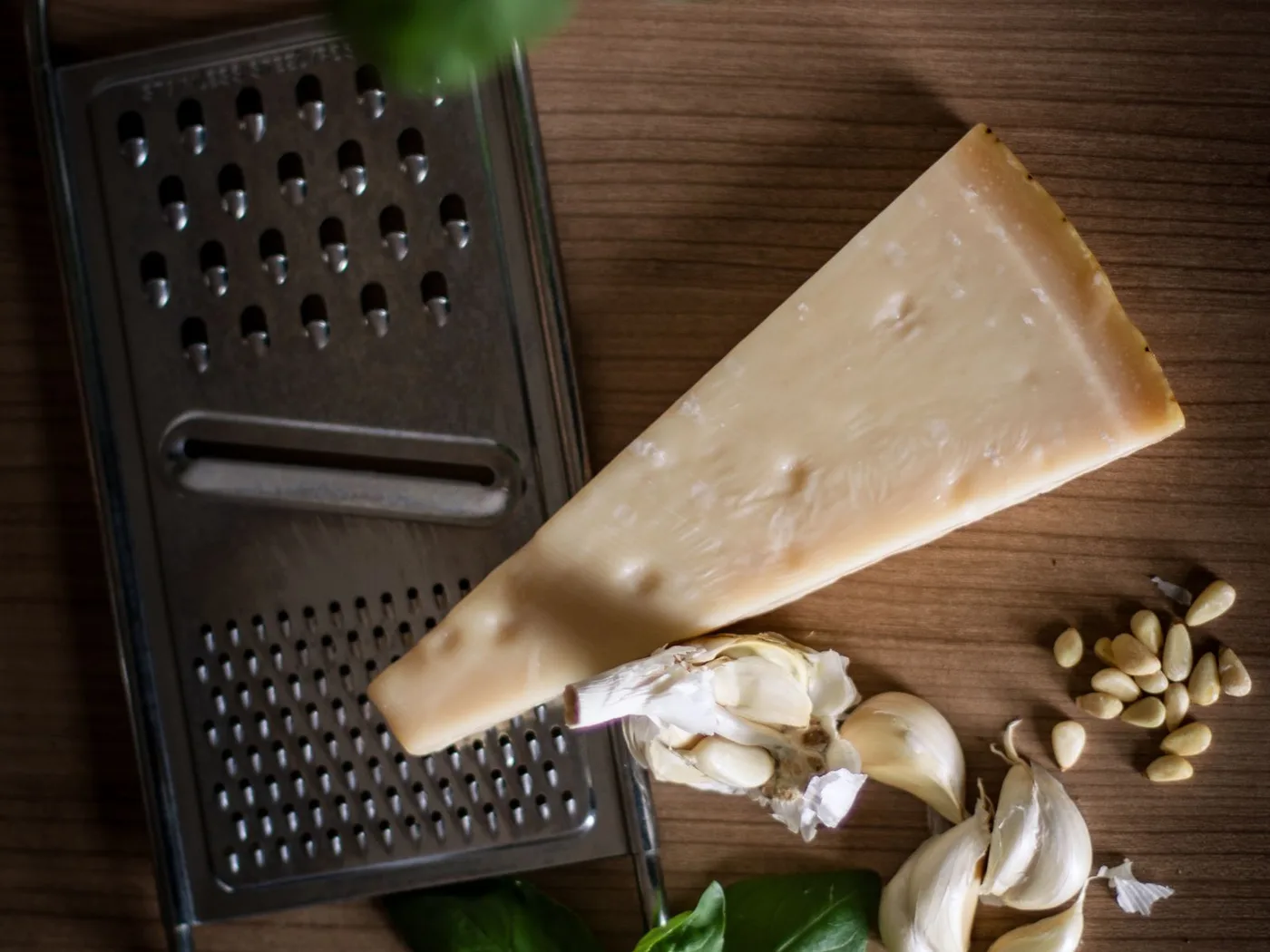
The original recipe from the Consorzio del Pesto Genovese has exactly seven components. There is no place for an eighth.
- Basilico Genovese DOP - young leaves, delicate, with no minty edge.
- Extra virgin olive oil - a gentle Ligurian one, not a pungent one.
- Pine nuts - Mediterranean for preference, not Chinese.
- Parmigiano Reggiano - aged, grated.
- Pecorino - hard sheep's cheese for the salty hit.
- Garlic - not much, but it has to be there.
- Coarse sea salt - it crushes the basil and protects the colour.
DOP basil: why it matters
Basilico Genovese DOP is a protected variety from Liguria. It has small delicate leaves and lacks the menthol note that stronger basils from hotter countries carry. That is precisely why real pesto tastes fresh rather than camphorous.
On the label, look for Basilico Genovese DOP. If it says only basil with no origin, it is not necessarily a bad pesto, but it is the first sign the producer economised.
The second sign is the colour. Real pesto is a deep green but not an artificially bright one. Too vivid a colour is often a sign of added colouring or blanched basil.
The oil decides both the price and the taste
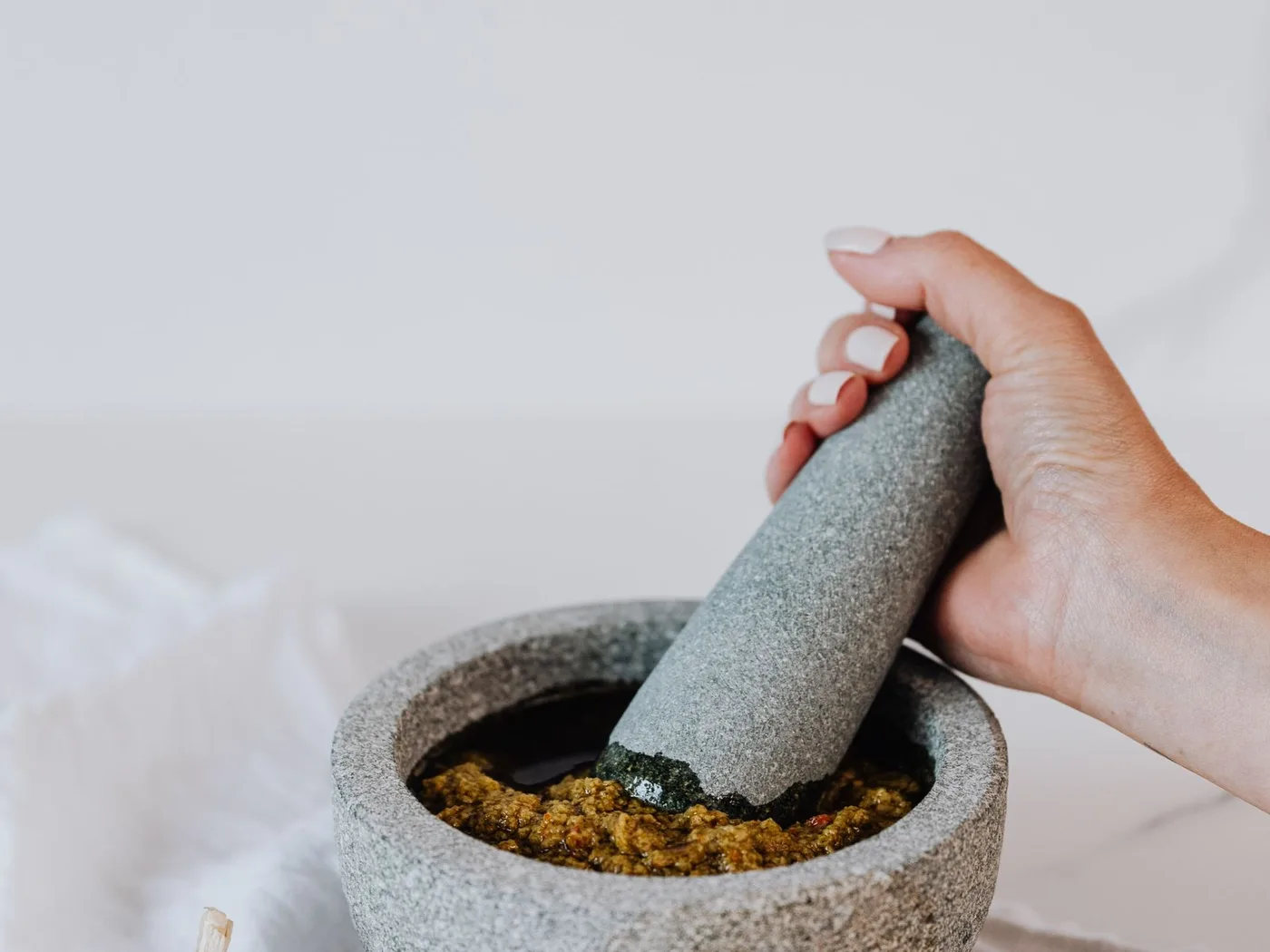
This is where most of the cost cutting happens. Real pesto uses extra virgin olive oil. Cheap versions replace most of it with sunflower or rapeseed oil, because that costs a fraction as much.
Check the order in the ingredients list. If olive oil comes first, good. If sunflower comes first and olive oil is somewhere near the back, it is a spread that smells of pesto, not pesto.
The second common substitution is the nuts. Pine nuts are expensive, so producers swap them for cashews or even cashew powder. The flavour is flatter and the buttery softness is missing.
Chilled versus long-life pesto
In the shop you will find two categories. Chilled pesto from the fridge counter has a shorter shelf life, tends to be closer to homemade and relies on fewer preservative tricks. Long-life pesto in a glass jar from the shelf keeps for months, but it is usually heat treated, which takes the freshness out of the basil.
Rule of thumb: for a quick unplanned dinner, take a good long-life pesto from a serious producer. When you want the experience closest to Liguria, look for chilled, or for a jar that boasts DOP basil and olive oil at the top of the list.
Neither one should be cooked. Pesto does not go into the pan. You stir it into hot pasta off the heat, with a spoonful of the cooking water. Cooking destroys both the colour and the aroma.
What pesto goes with besides pasta
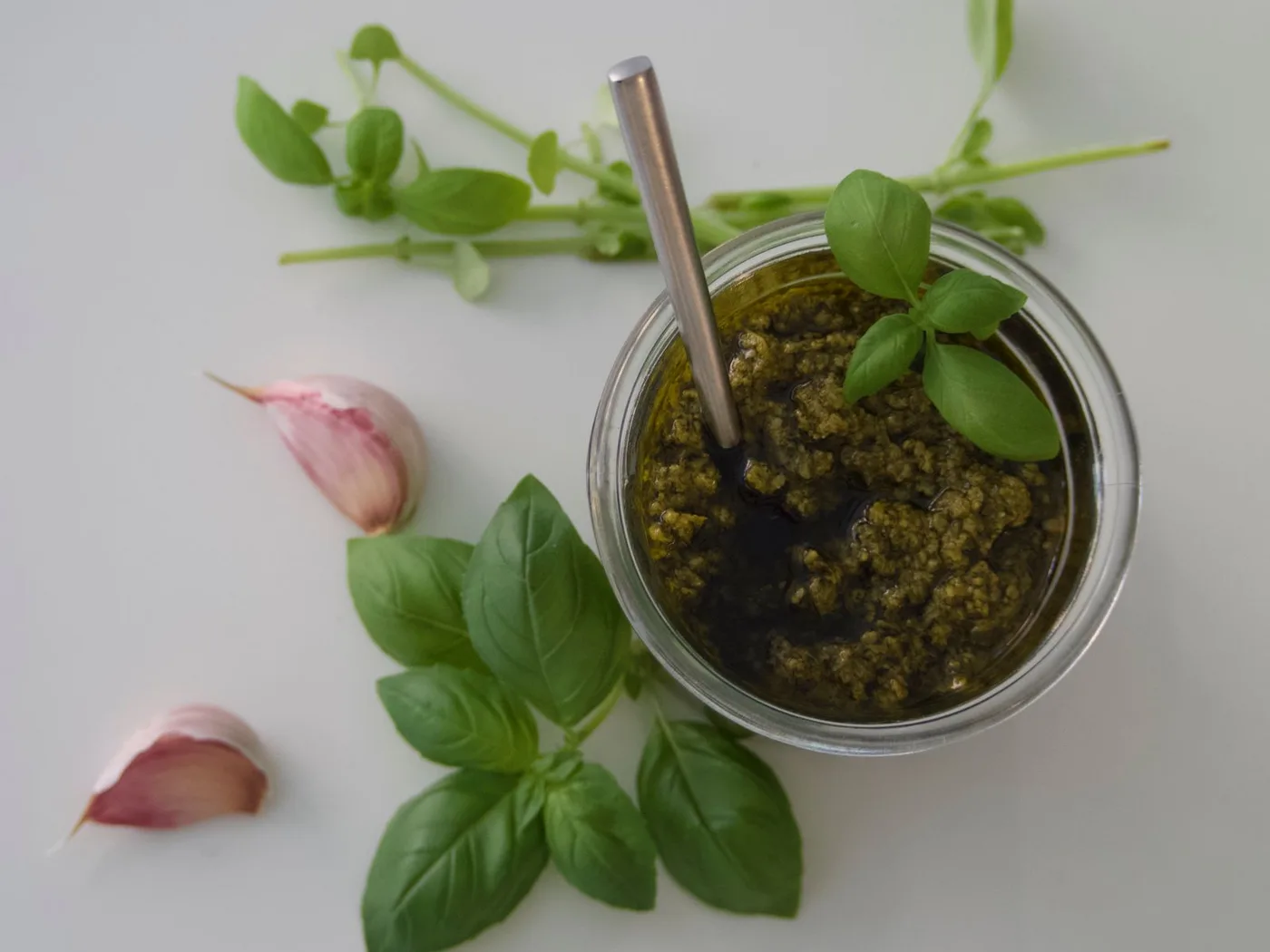
The classic is trofie or trenette al pesto, best with a few pieces of potato and green beans cooked in the same water as the pasta, which is how they do it in Genoa. But pesto can do a great deal more.
A spoonful into minestrone just before serving. A thin layer on a pizza bianca. With baked fish or chicken breast. On bruschetta with tomato. Or simply on fresh bread with a slice of mozzarella.
The rule stands: add the pesto at the end, away from the heat. It is a cold sauce and it should be treated like one.
Where to buy real pesto
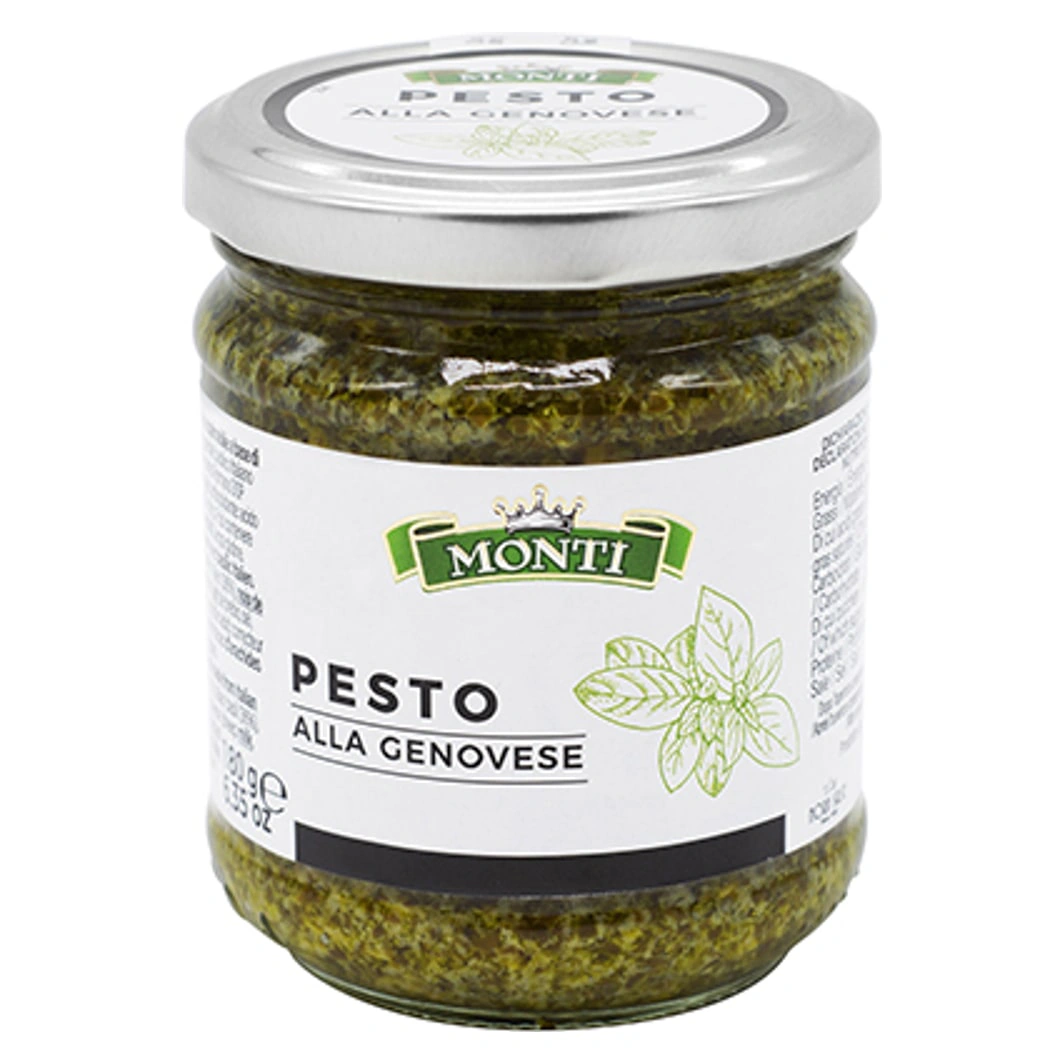
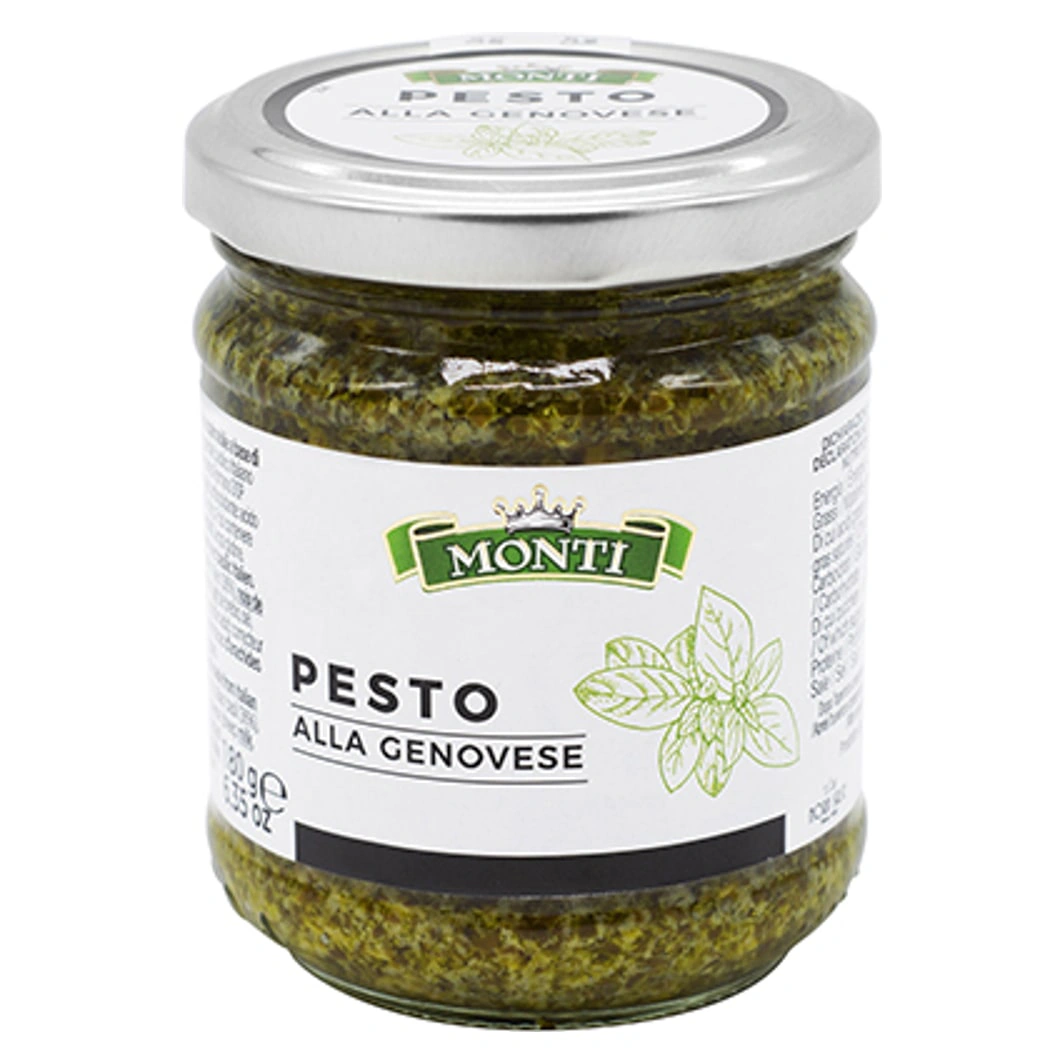
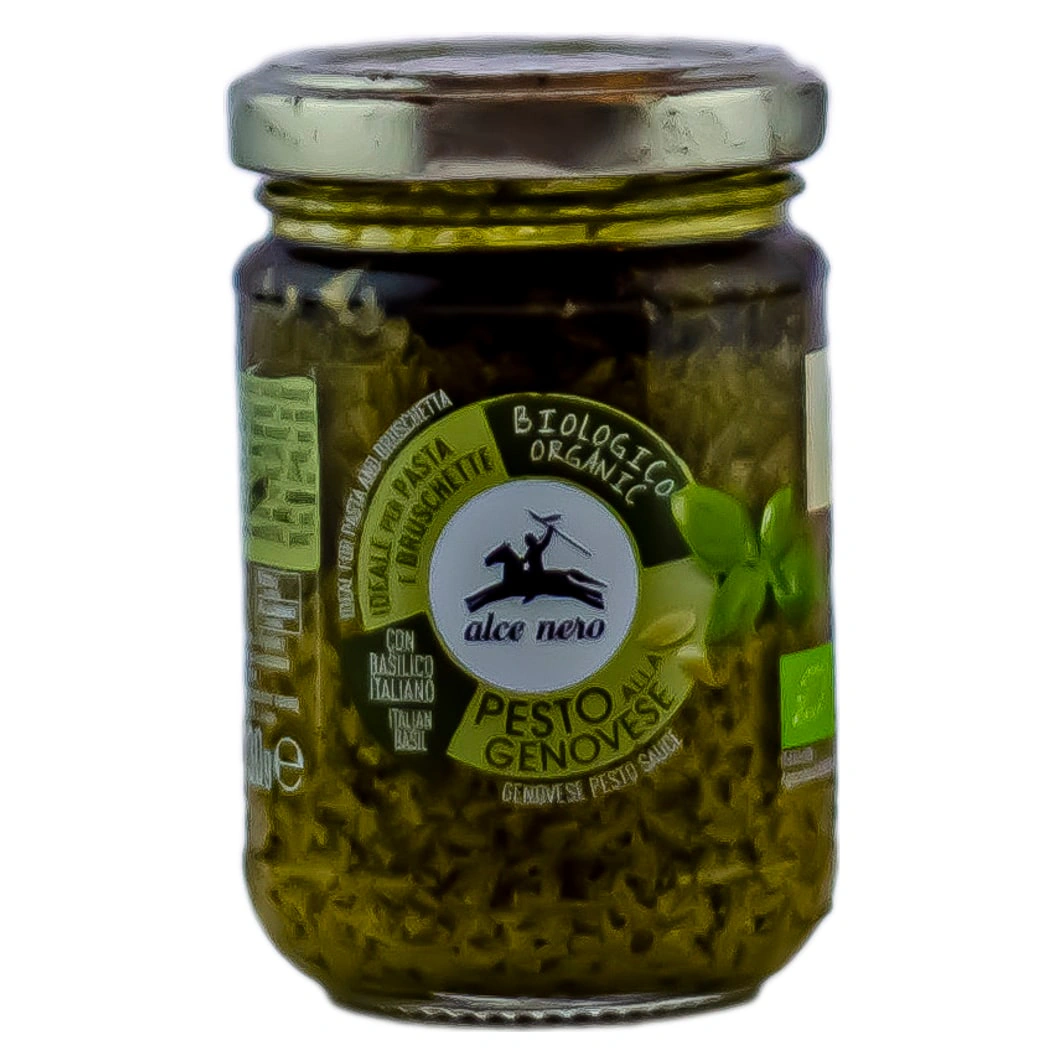
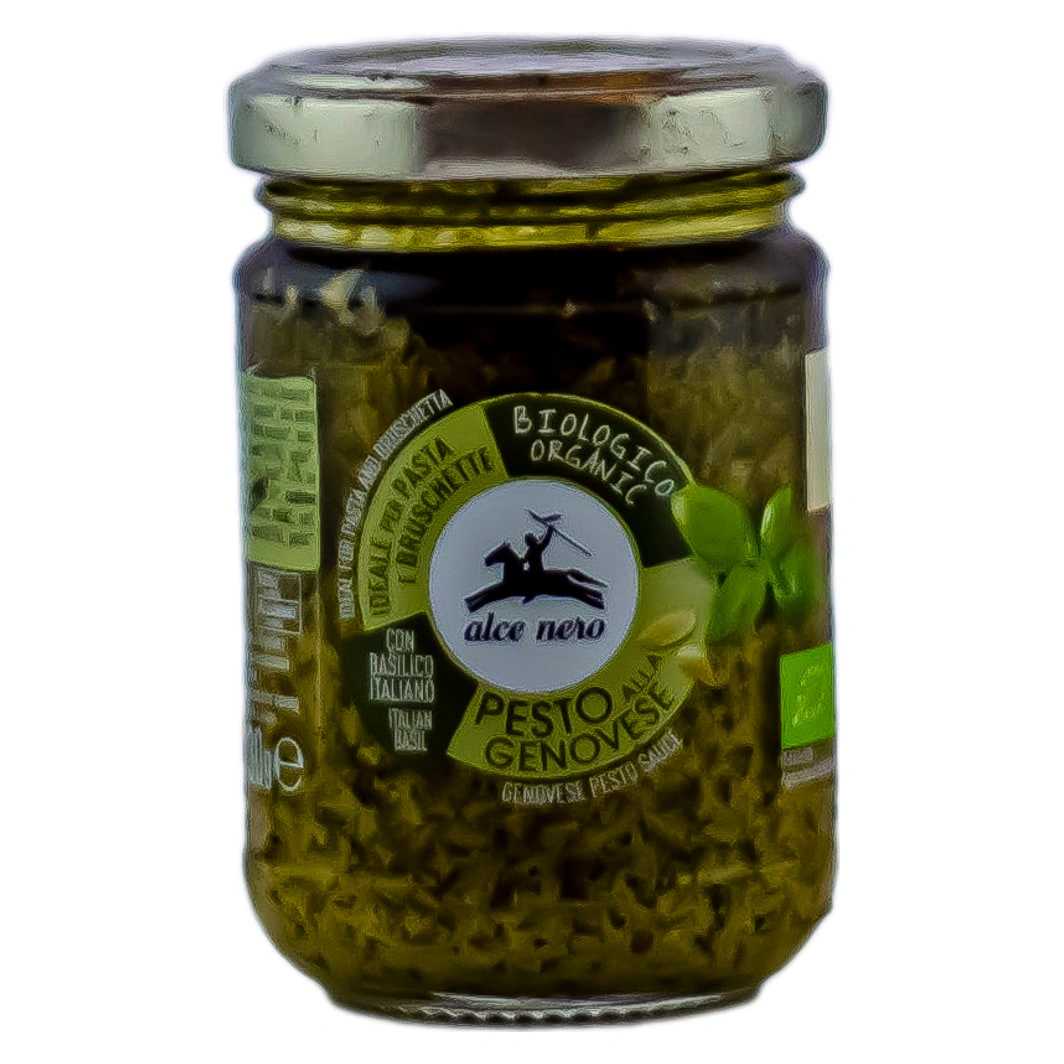
In the Italiamo catalogue you will find Italian pesto chosen so that it contains olive oil and an honest ingredient list rather than a sunflower substitute: Pesto Genovese with basil 190 g, Monti basil pesto 180 g or organic Alce Nero basil pesto 130 g. It is direct import from Italian producers, so the ingredients match what you would expect from real Italian pesto.
On your first purchase, run a small test. Buy one quality jar and one cheap supermarket one, and taste both on plain pasta with nothing else. You will feel the difference in freshness and softness immediately.
Once you find your one, stick with it. Good pesto is one of the few things where a couple of euros more genuinely pays off, because you use it by the spoonful, not by the litre.
Frequently asked questions
- Why does my pesto go dark on the pasta?
- Basil oxidises on contact with heat and air. That is why pesto is never cooked - you simply stir it into hot pasta off the heat with a spoonful of the cooking water. An opened jar darkens too, unless you pour a thin layer of olive oil over the top.
- Is pesto without pine nuts still authentic?
- The original Consorzio recipe calls for pine nuts. Cashew versions are cheaper and perfectly edible, but they taste flatter and by the traditional definition they are no longer pesto alla genovese. If authenticity matters to you, look for pine nuts in the ingredients.
- How long does opened pesto keep?
- An opened jar keeps five to seven days in the fridge if you cover the surface with a thin layer of olive oil to seal it from the air. Pesto also freezes well, ideally in portions in an ice cube tray.