June 11, 20269 min read
Cacio e pepe: the Roman recipe with three ingredients that frighten everybody
Three ingredients. Five minutes of cooking. And half of Italy arguing about exactly how to do it. This is the version that works at home, without a thermometer and without panicking over the starchy water.
Three things on the plate. Pasta, sheep's cheese, black pepper. No oil, no butter, no cream. The pasta sits in the pot for 15 minutes and people in Roman trattorias still bow to that plate.
The reason: nothing hides. If the pasta is overcooked, you can see it. If the cheese goes lumpy, it is lumpy. If you forget to toast the pepper in the pan, the flavour falls flat. Five minutes of a technical corridor - inside it you are the chef, outside it you have a disappointment and some salty cheese.
This guide comes from Roman trattorias that have been making it daily for thirty years. Including quantities that work at home on an ordinary hob.
Three ingredients, a thousand ways to ruin it
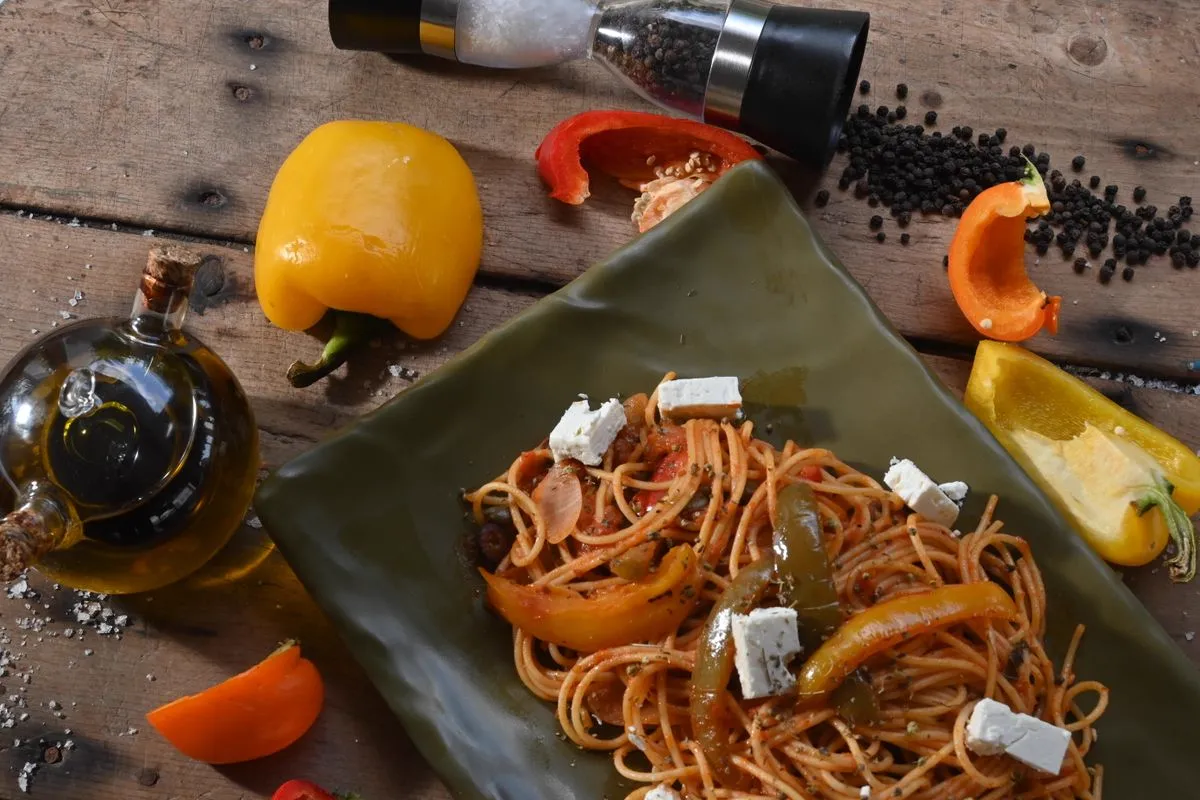
Italian cooking has a rule: the fewer the ingredients, the higher the bar. Cacio e pepe proves it. Every component has to be exactly the right thing. Not similar, not nearly, not whatever was on offer at the supermarket.
Before the recipe, a quick inventory. If you are missing one of the following four, stop here.
- Tonnarelli, spaghettoni or at least thick spaghetti. Thin spaghettini will not release enough starch.
- Pecorino Romano DOP - sheep's cheese from Lazio or Sardinia only. Parmesan is a different cheese and it does not work here.
- Whole black peppercorns - Tellicherry or Malabar for preference. Pre-ground pepper loses 60 % of its aroma within an hour.
- A heavy pan or a wok. A thin stainless pan kills the cream.
The pasta: tonnarelli are the only correct shape
Tonnarelli look like thick spaghetti with a square cross-section. They are the Roman classic and they hold the sauce along their whole length. They are made with egg, denser than ordinary dried pasta.
Second best choice: spaghettoni or bucatini. Spaghettoni are around 2.2 mm across, an ideal ratio of surface to mass. Bucatini have a hole down the middle that traps some of the creamy sauce.
Worst choice: spaghettini, capellini, vermicelli. Thin shapes overcook, stick together, and the sauce slides off them.
A bronze die (trafila al bronzo) is a bonus in this recipe, not a requirement. The rough surface grips the Pecorino better, but smooth industrial pasta works too if your technique is right.
Pecorino Romano DOP: not every pecorino is the same
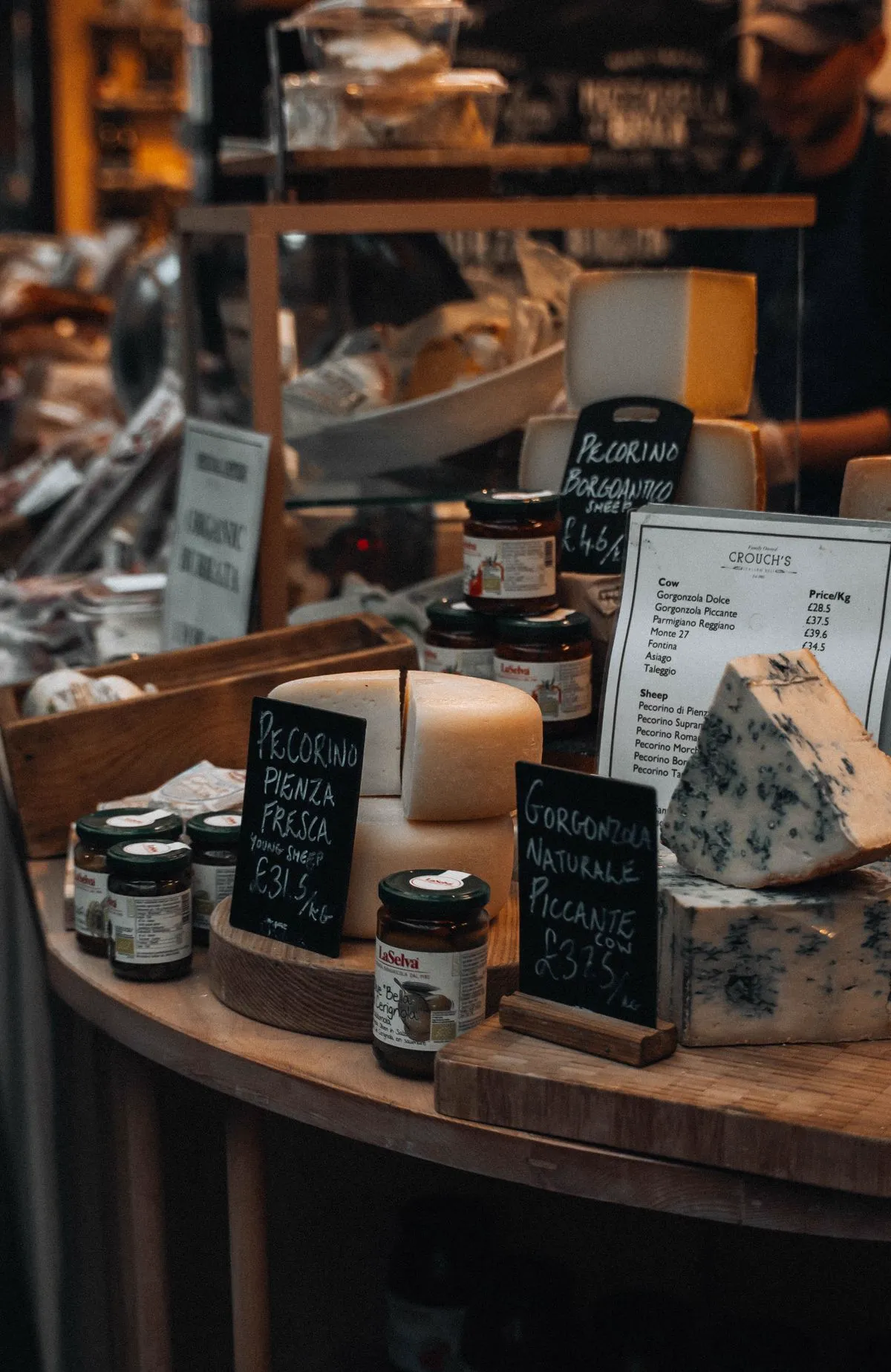
Pecorino Romano is 100 % sheep's milk, salty, aged at least 5 months, and made in only three areas - Lazio, Sardinia and the province of Grosseto. The DOP designation has been legally protected since 1996.
The salty, sharp profile is the key. Young Pecorino Sardo is milder and has no place in cacio e pepe - it lacks the salt hit that replaces any salt in the pasta water.
Never use pre-grated cheese from a bag. The anti-caking additives, cellulose and starch, block the emulsion. Real Pecorino Romano is grated fresh, as fine as you can manage, on a microplane or the finest side of the grater.
The ratio for 100 g of dried pasta: 70 to 80 g of finely grated Pecorino. Yes, that is a lot. It is exactly what this recipe wants.
Pepper: freshly crushed, lightly toasted
Pepper is not just salt at the end. In cacio e pepe it is an equal third ingredient, responsible for the heat and the aromatic base of the whole dish.
The step 80 % of home cooks skip: toasting the pepper. Crush the whole peppercorns in a mortar, or grind them coarsely, then put them in a dry pan over medium heat and after 60 to 90 seconds you will smell the aroma. That is the moment to add everything else.
The second thing: crushed, not ground fine. Grinding to powder releases the oils quickly, but they burn on contact with heat. A coarse crush holds the aroma longer and gives you texture under the tooth.
The ratio for 100 g of pasta: 2 heaped teaspoons of freshly crushed pepper. It sounds like a lot. It is not.
The recipe step by step, for two portions
Mise en place: 200 g tonnarelli or spaghettoni, 150 g Pecorino Romano DOP finely grated, 4 teaspoons whole black peppercorns, water. Time: 12 to 15 minutes.
- Bring the water to the boil. Salt it only lightly - Pecorino is very salty. Use half your usual amount, or none at all if your cheese is heavily salted.
- Crush the pepper coarsely in a mortar. Put it in a dry pan over medium heat and toast it for 60 seconds, until it smells.
- Add 100 ml of boiling water from the pot to the toasted pepper. You get a peppery broth. Take it off the heat.
- Drop the pasta into the boiling water. Cook it 2 minutes less than the packet says, it finishes in the pan.
- About a minute before the end, move the pasta into the pan with the peppery water. Over medium heat keep it moving for 60 to 90 seconds, adding starchy water from the pot as needed.
- Take the pan off the heat. Wait 30 seconds for the temperature to drop below 80 °C. This is the crucial point, above that the cheese seizes into lumps.
- Add the Pecorino in stages, stirring hard or tossing the pan. Add hot water a spoonful at a time until the sauce is smooth and creamy.
- Serve immediately on warmed plates. Dust with a little more cheese and freshly crushed pepper.
The four most common mistakes
Cacio e pepe defeats beginners and cooks with ten years behind them alike. Here is where it goes under.
- Too much salt in the pasta water. The Pecorino brings enough saltiness for four dishes.
- Too high a temperature when the cheese goes in. Above 80 °C the casein proteins coagulate and the cream breaks into lumps and oil.
- Pre-grated cheese, or parmesan instead of Pecorino Romano. A different fat and salt profile, a different result.
- Too little starchy water. Without it the sauce will not hold, and the cheese sets and clumps.
Frequently asked questions
- Can I swap Pecorino Romano for parmesan?
- No. Parmesan is cow's milk, with a different fat profile and less salt. The result will be milder and sweeter and it will not be cacio e pepe. It is like swapping ricotta for feta - both are cheese, and that is where the similarity ends.
- Why does my cheese go lumpy?
- Three possible reasons: the pan is too hot (over 80 °C), the cheese is grated coarsely instead of finely, or it came from a bag with anti-caking agents. Take the pan off the heat before adding the cheese and wait 30 seconds.
- How much pasta water should I keep?
- For 200 g of pasta keep at least 400 ml of starchy water before draining. You will use 200 to 250 ml, the rest is insurance. You cannot do this without starchy water.
- Which pepper is best?
- Tellicherry from India, with Malabar very close behind. Big grains, an intense fruity and citrus profile, and it keeps its aroma after toasting. Avoid ground pepper from a bag - within an hour of grinding it has lost most of its volatile oils.
- Can I make cacio e pepe in advance?
- No. The emulsion holds for 5 to 10 minutes after you finish it. If somebody has to wait, let it be the guests, not the pasta. You can grate the Pecorino an hour ahead and have the pepper crushed, but the assembly happens at the last moment.
To finish
Cacio e pepe is a test. Three ingredients, nowhere to hide. When it works, and it will after two or three attempts if you pull the pan off the heat and add the cheese by the spoonful, you have a dish that costs 14 EUR in a restaurant in Rome.
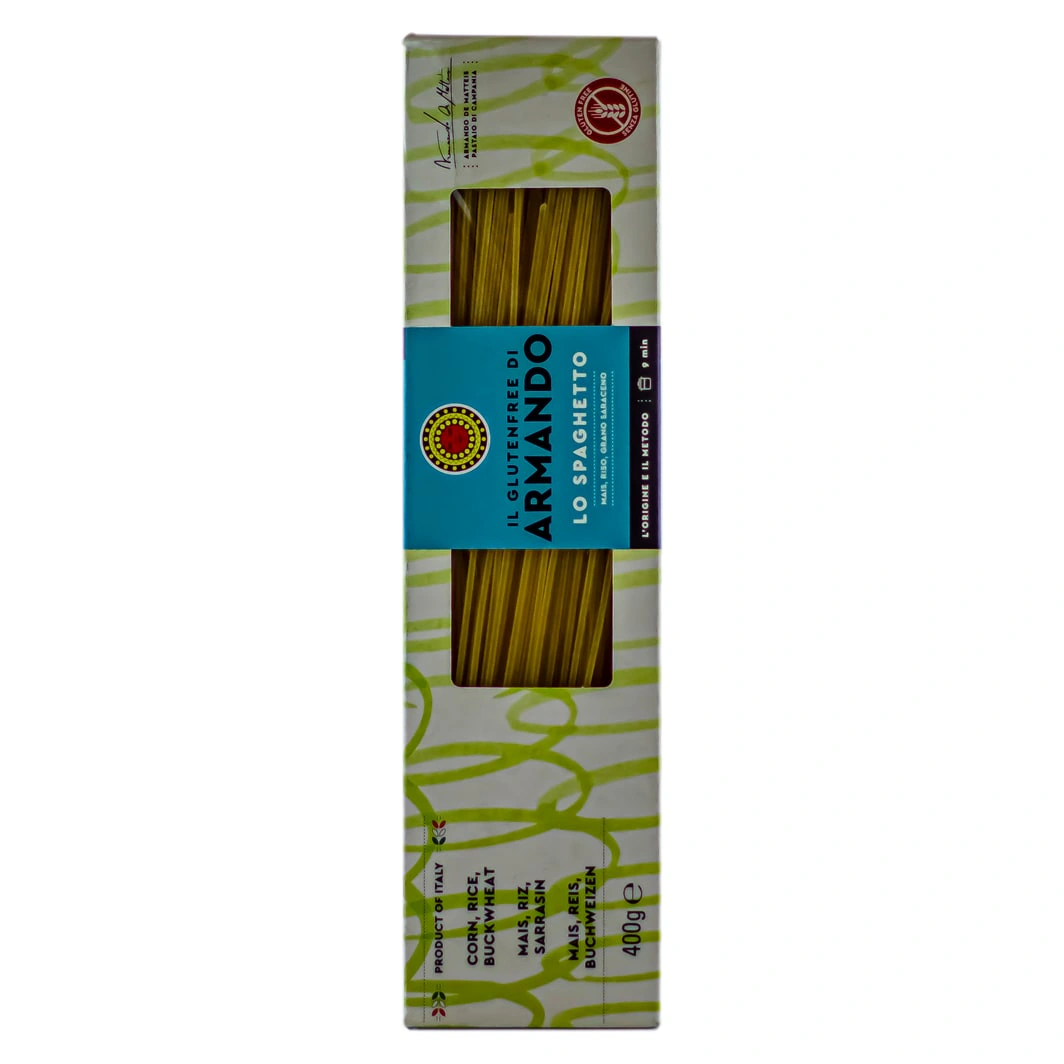
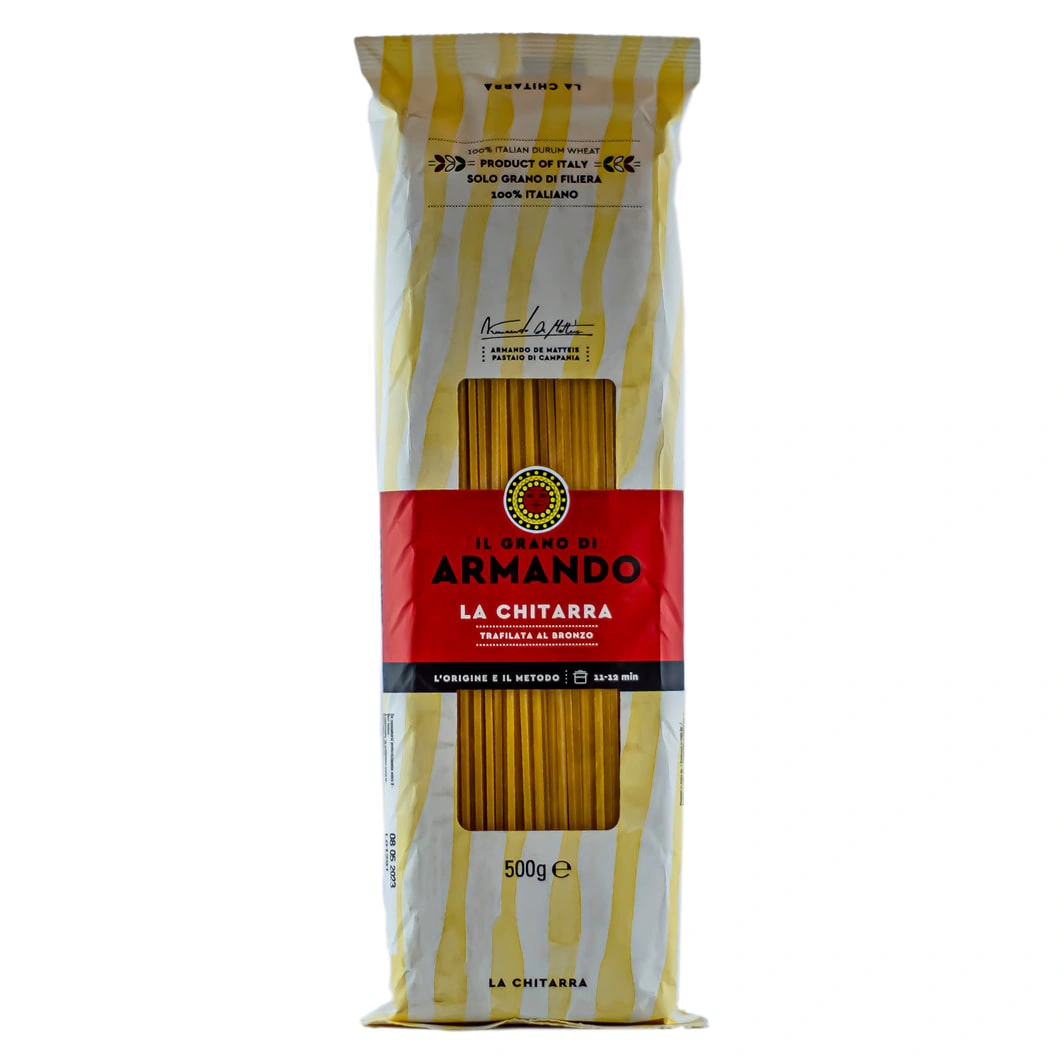
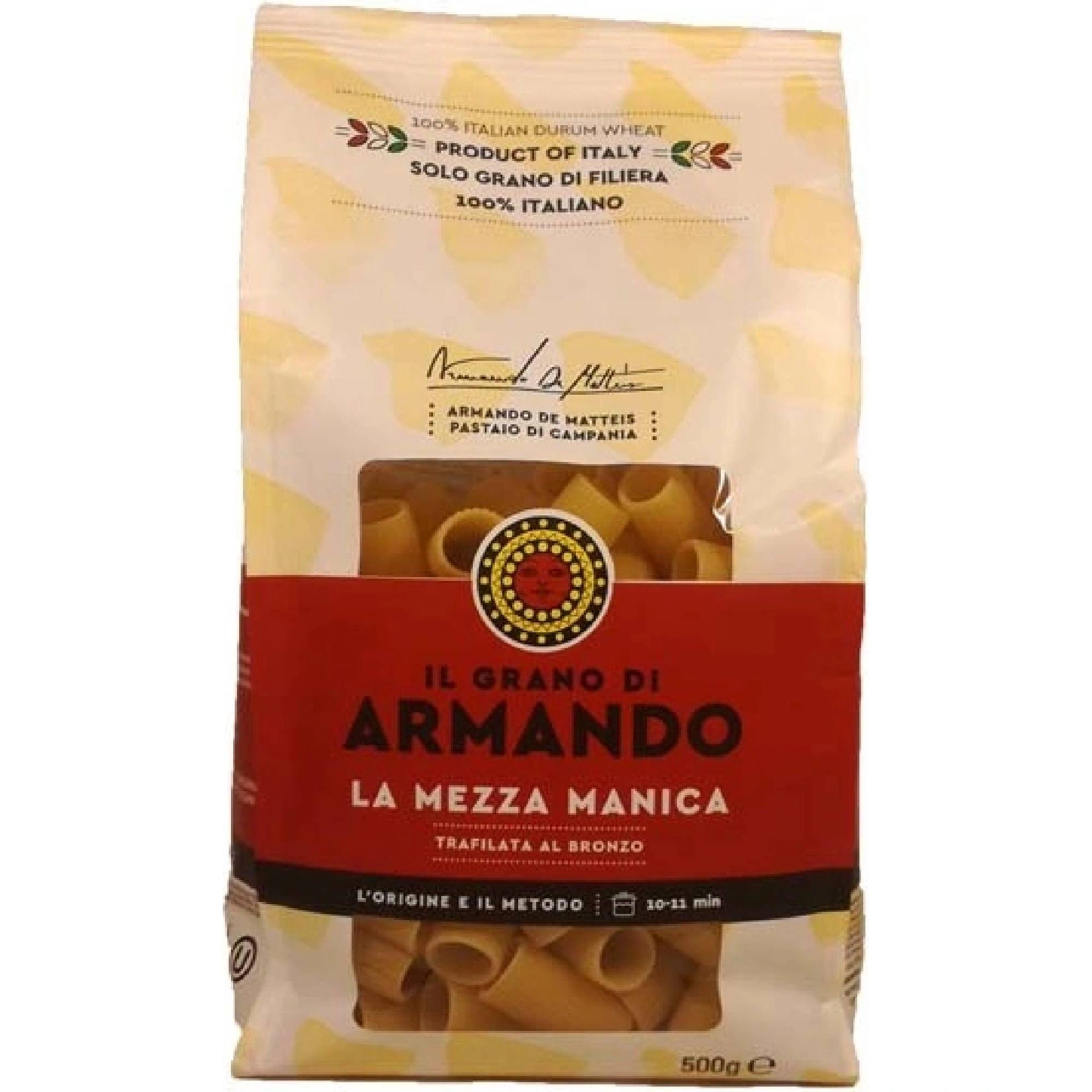
You will find the ingredients in the Italiamo catalogue: Pecorino Romano DOP, and dried pasta from Grano Armando - Spaghetto, Chitarra or Mezza Manica. Buy the pepper from a specialist spice shop, not the supermarket.
Open the Pasta section and start with a 500 g bag of tonnarelli or spaghettoni. You will make the second portion the same week, because the first one gets you.