May 28, 20267 min read
Balsamic vinegar: IGP, DOP and what you are actually buying in the supermarket
Three letters decide whether you are holding a craft product or caramelised sugar with vinegar in it. A practical guide to the label.
You are standing in the supermarket in front of the vinegar shelf. One balsamic costs 1.80 EUR. Another 8 EUR. A third 45 EUR. The most expensive one comes in a little 100 ml bottle with a wax seal.
All three are called balsamic. All three are probably named legally. And yet each one is a completely different product made in a completely different way.
In ten minutes this article will tell you how to read the label, what to avoid, what is worth buying, and how to spot a craft product against an industrial imitation.
The three grades you need to know
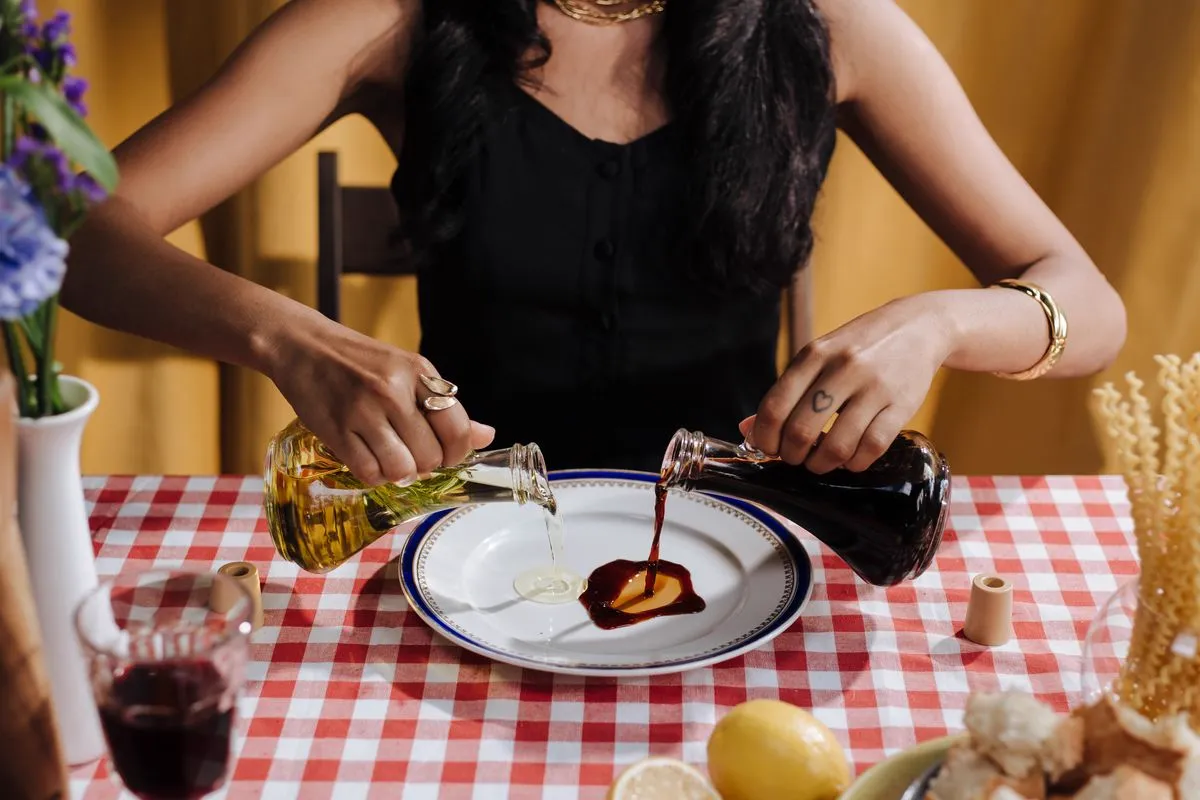
Aceto Balsamico Tradizionale di Modena DOP and Aceto Balsamico Tradizionale di Reggio Emilia DOP. The top grade. Made from cooked grape must (mosto cotto), with no added vinegar, aged at least 12 years in wooden barrels. The smallest permitted bottle is 100 ml. Price 60 to 200 EUR a bottle. Yes, really.
Aceto Balsamico di Modena IGP. The middle grade, regulated by the European Union. Made from grape must plus wine vinegar, and it may contain caramel as a colouring. Minimum 60 days of ageing. The quality range here is enormous, from average to excellent. Price 5 to 25 EUR for a standard bottle.
Condimento Balsamico or Salsa Balsamica. No protected designation. This can be anything: a mix of wine vinegar, caramel and flavoured sugar. EU rules are looser here and a producer can sell you almost anything under the balsamic name.
The practical rule: if you see IGP or DOP on the label, buy it. If not, read the ingredients very carefully.
How to read a Modena IGP label
Some producers use the leaf label system, an unofficial but practical way to judge the quality of an IGP balsamic quickly.
One leaf means a younger vinegar, a higher share of wine vinegar, a simpler flavour, fine for everyday use and marinades.
Two leaves mean middling quality, a higher share of cooked must, a softer profile, good for salads and semi-dry dishes.
Three leaves mean more must, longer ageing and a thicker consistency. This is already a balsamic that deserves its own teaspoon over a piece of Parmigiano.
Four leaves and up are premium IGP, sometimes aged 10 years or more. Price 25 to 60 EUR. It borders on DOP quality.
Careful: not every producer uses the leaves. Other indicators: the word Invecchiato means aged (at least 3 years), Extra Vecchio means very aged (at least 12 years, close to DOP quality).
What to do with which balsamic
Young IGP (1 to 2 leaves), 5 to 10 EUR: marinades, dressings, reductions. This is your everyday balsamic. Mix it into oil with mustard and honey for salad, or reduce it in a pan with sugar and butter for a sauce to go with grilled meat.
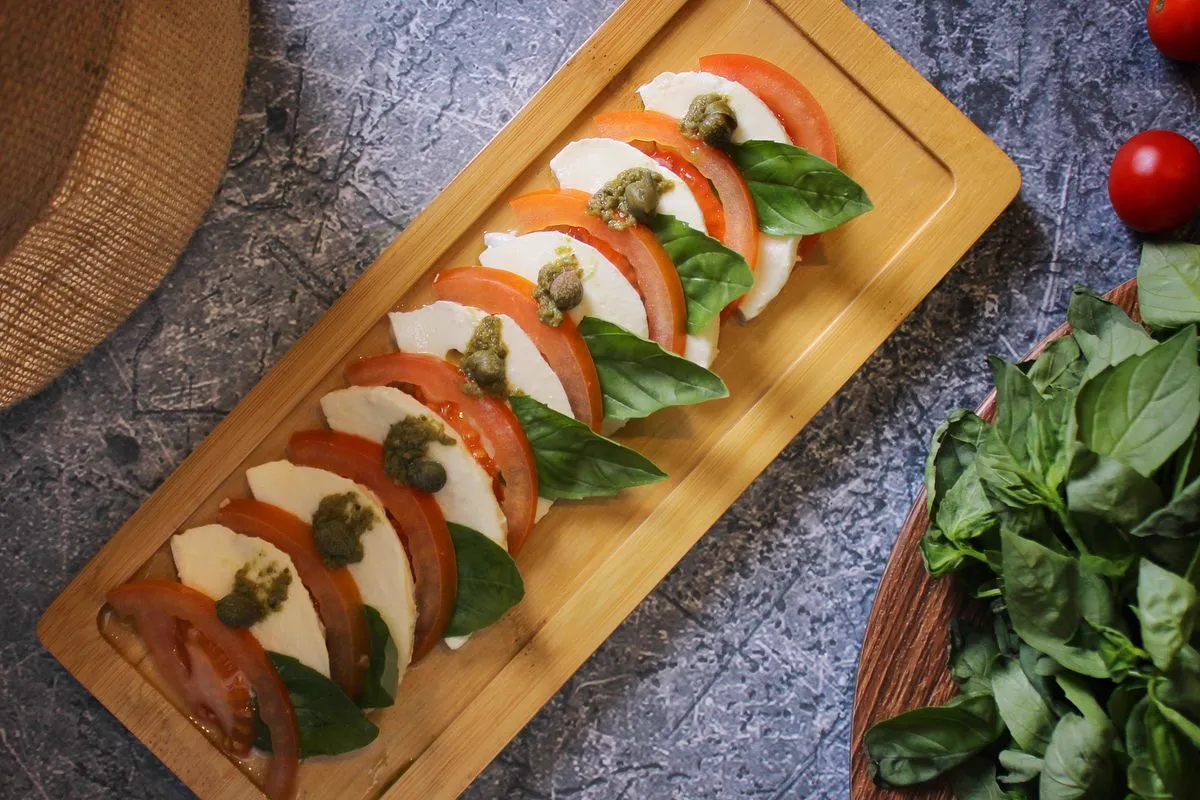
Mid IGP (3 leaves), 12 to 20 EUR: fresh tomato salad with mozzarella di bufala, steamed asparagus, sautéed mushrooms. Here you want to taste the balsamic as an ingredient, not just as an acidic background.
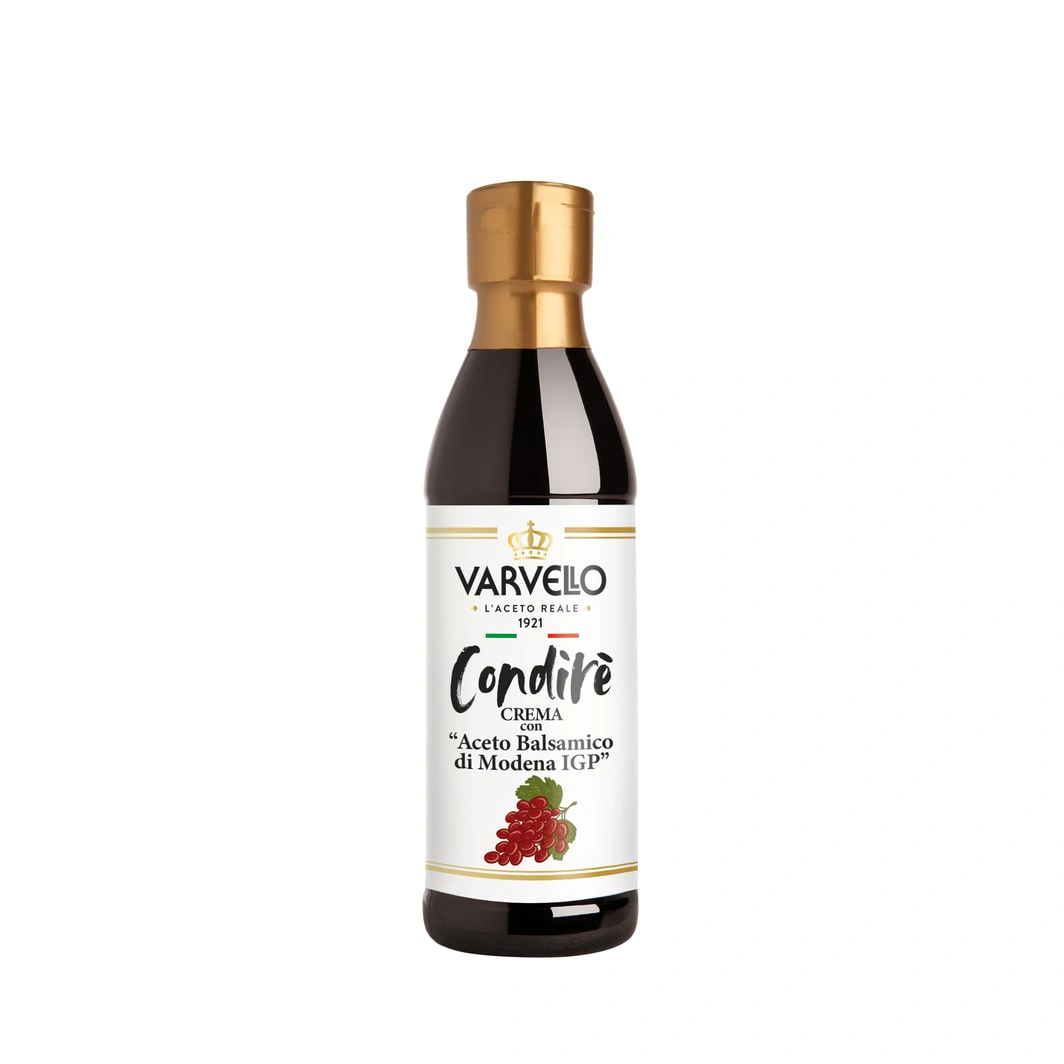
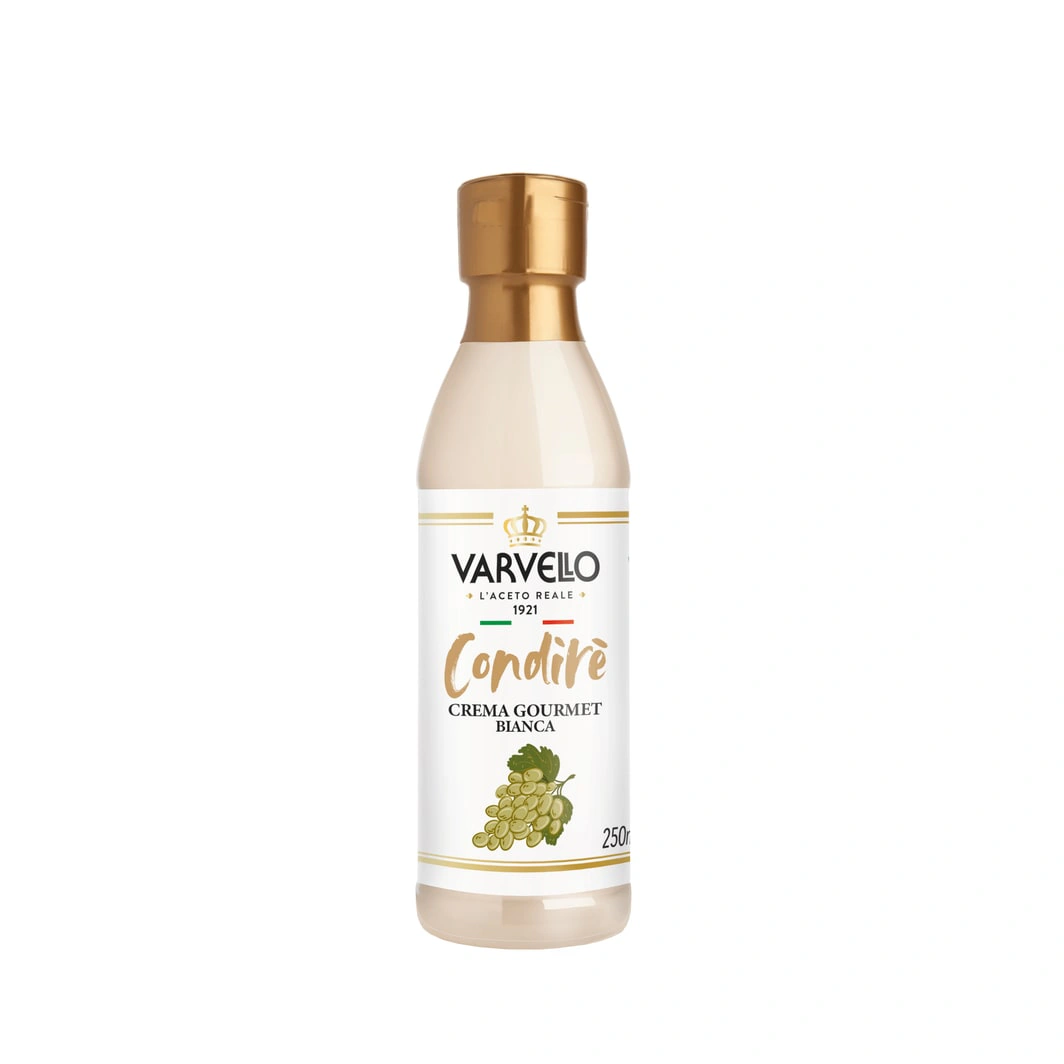
Glassata or crema balsamica: a thick syrup of balsamic and sugar. A practical tool for decorating - drops around the plate, on bruschetta, on grilled cheese. Varvello Glassata IGP 250 ml from our catalogue is a solid choice, and there is a white version for pale dishes.
Premium IGP (4+ leaves) and DOP: fresh Parmigiano, strawberries, vanilla ice cream, baked pear. At this level you take it by the teaspoon. Do not heat it, do not mix it with anything strong. It is an essence.
The rule: the better the balsamic, the less you do with it. The best balsamic needs one teaspoon and good ingredients next to it.
The most common buying mistakes
Automatically buying the most expensive one on the shelf. Price does not always track quality. Some 8 EUR bottles are better than 18 EUR rivals.
Buying glassata thinking it is balsamic. Glassata is a reduction of balsamic with sugar. Useful for decorating, but it is not the same product.
Buying balsamic flavoured with lemon, raspberry or truffle. These are flavoured vinegars, sometimes good, sometimes not, but they are not traditional balsamic.
Storing it in sunlight or in a warm cupboard. Balsamic does not like light or heat. Keep it in a cool dark cupboard.
Assuming an expensive DOP always beats a good IGP. For everyday use an IGP is plenty. Save the DOP for the dishes where you will genuinely taste the difference.
Frequently asked questions
How long does an opened balsamic keep? An IGP keeps 2 to 3 years in a cool dark cupboard. A DOP practically indefinitely if it is sealed well.
Should balsamic go in the fridge? No. Quite the opposite, the fridge makes the flavour worse. Keep it at room temperature.
Can I cook with expensive balsamic? You can, but there is no point. High heat destroys the delicate aromas. Cook with a younger IGP and keep the expensive one raw.
What is the difference between Modena and Reggio Emilia DOP? Reggio Emilia DOP uses coloured labels (red, silver, gold) by age. Modena DOP uses Affinato (12+ years) and Extravecchio (25+ years). Both are top tier.
Balsamic with fish? Yes, especially on oily fish like tuna or salmon. A few drops of glassata on grilled salmon with black pepper is an excellent combination.
To finish
Balsamic is one of the most misunderstood products in Italian cooking. Half the bottles in Slovak supermarkets are just flavoured vinegar, but a good IGP is easy to find and worth the money.
Buy one young IGP for everyday use and one mid range bottle (3 leaves) for fresh salads and tomatoes. That covers 95 % of situations. Spend more only if you are genuinely a fan.
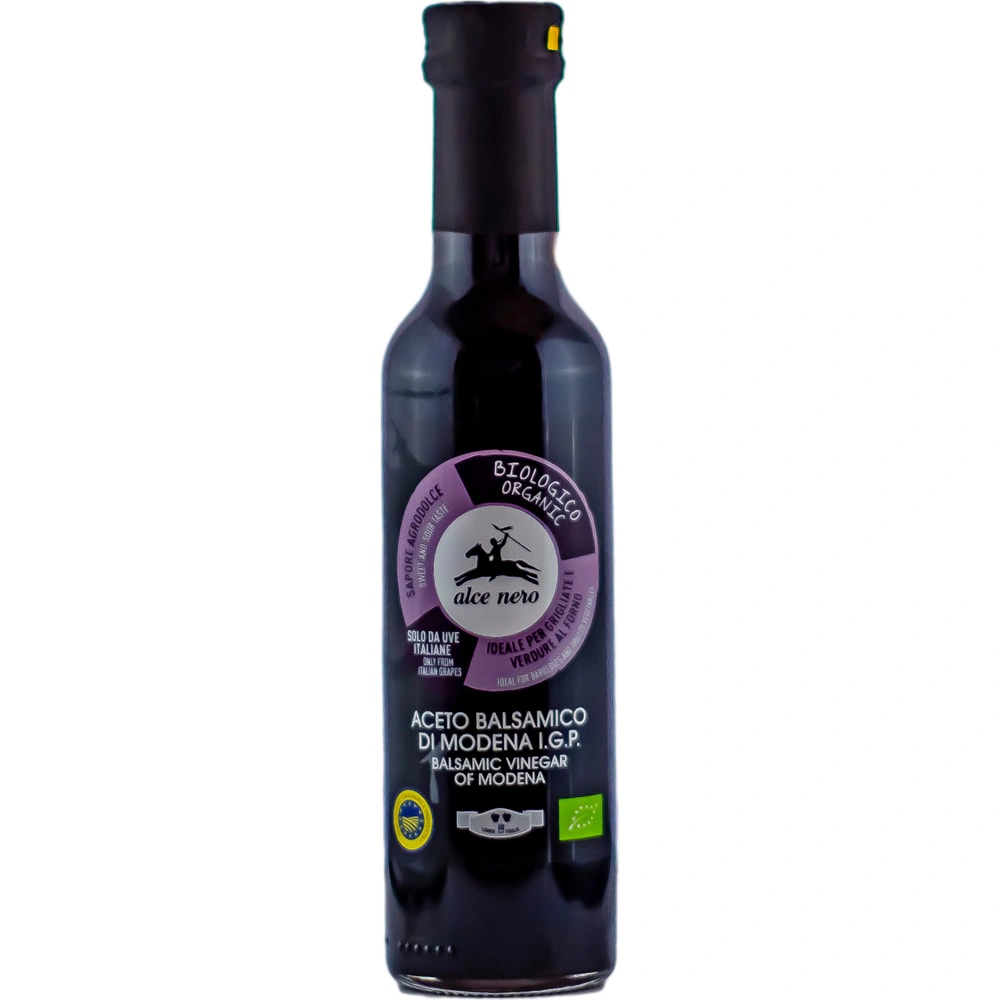
For the Slovak market our catalogue carries Varvello Glassata IGP, a solid glaze for everyday decorating, good quality at a fair price. If you want the vinegar itself rather than a glaze, take Alce Nero Bio Balsamico 250 ml.