October 1, 20266 min read
I never cook pesto. This is how I make Ligurian pasta in 15 minutes
Seven ingredients in a jar, a pot of water and one starchy-water trick. No cream, no frying pan.
Pesto does not belong on the heat. Throw it into a hot pan and the basil turns brown, the olive oil goes bitter and the cheese splits. The scent of a summer garden becomes grass and garlic, which is a shame, because good pesto looks after itself.
The whole recipe rests on one thing: pesto meets the pasta off the heat. The rest is a pot of water, a few minutes and some proper stirring. You need no mortar and no marble slab.
What real pesto Genovese actually is
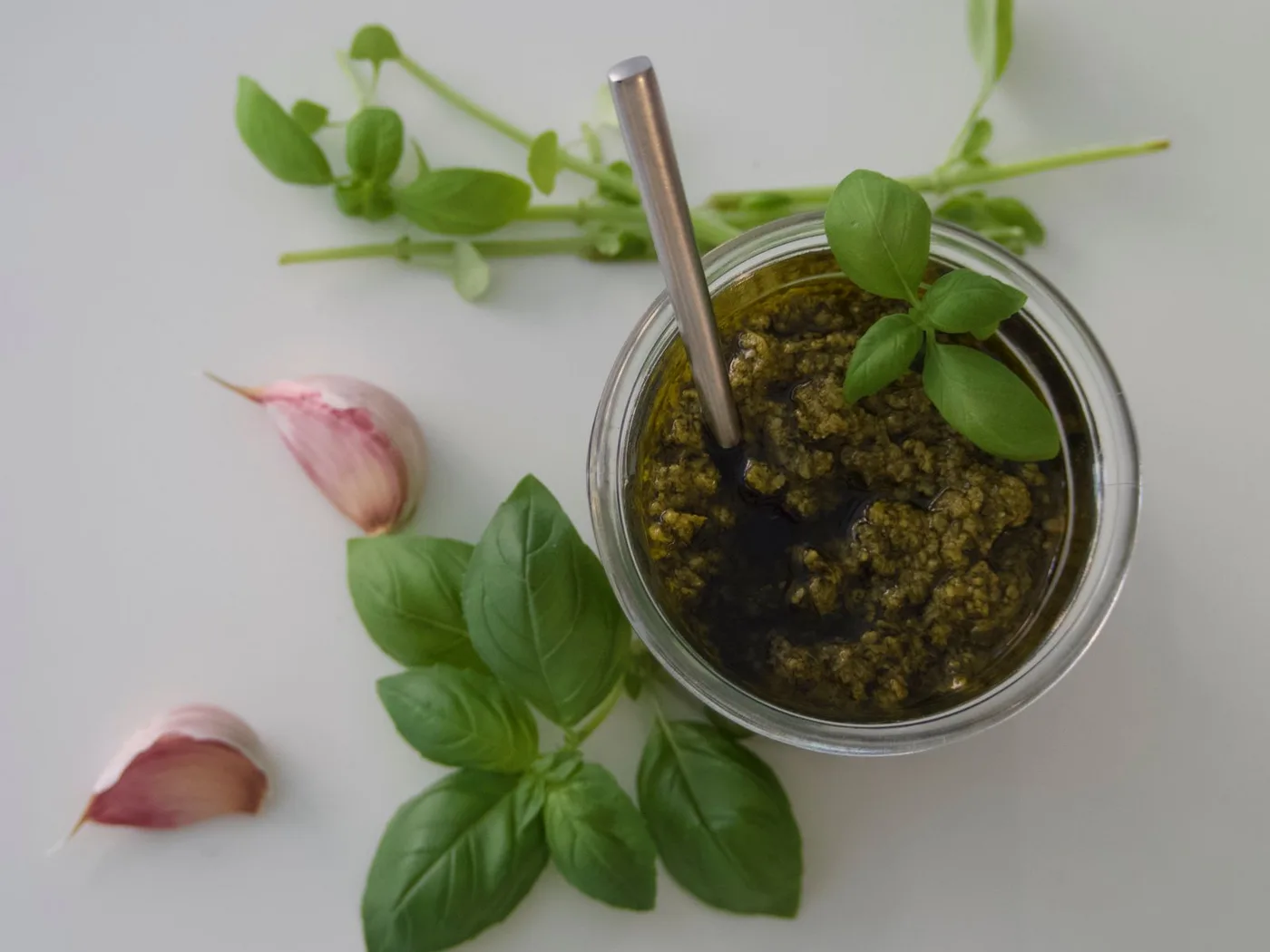
Pesto comes from Liguria, the narrow strip of coast around Genoa. The name comes from the Italian pestare, to crush. It was originally made in a marble mortar with a wooden pestle, and some Ligurians will tell you it is not pesto otherwise.
The real recipe has seven ingredients: basil (ideally the small-leaved Basilico Genovese DOP, not the big-leaved kind from a hypermarket), extra virgin olive oil, pine nuts, garlic, coarse salt, Parmigiano Reggiano and Pecorino. Nothing else. Cream, butter or spinach to boost the colour have no place in it.
Ingredients for two
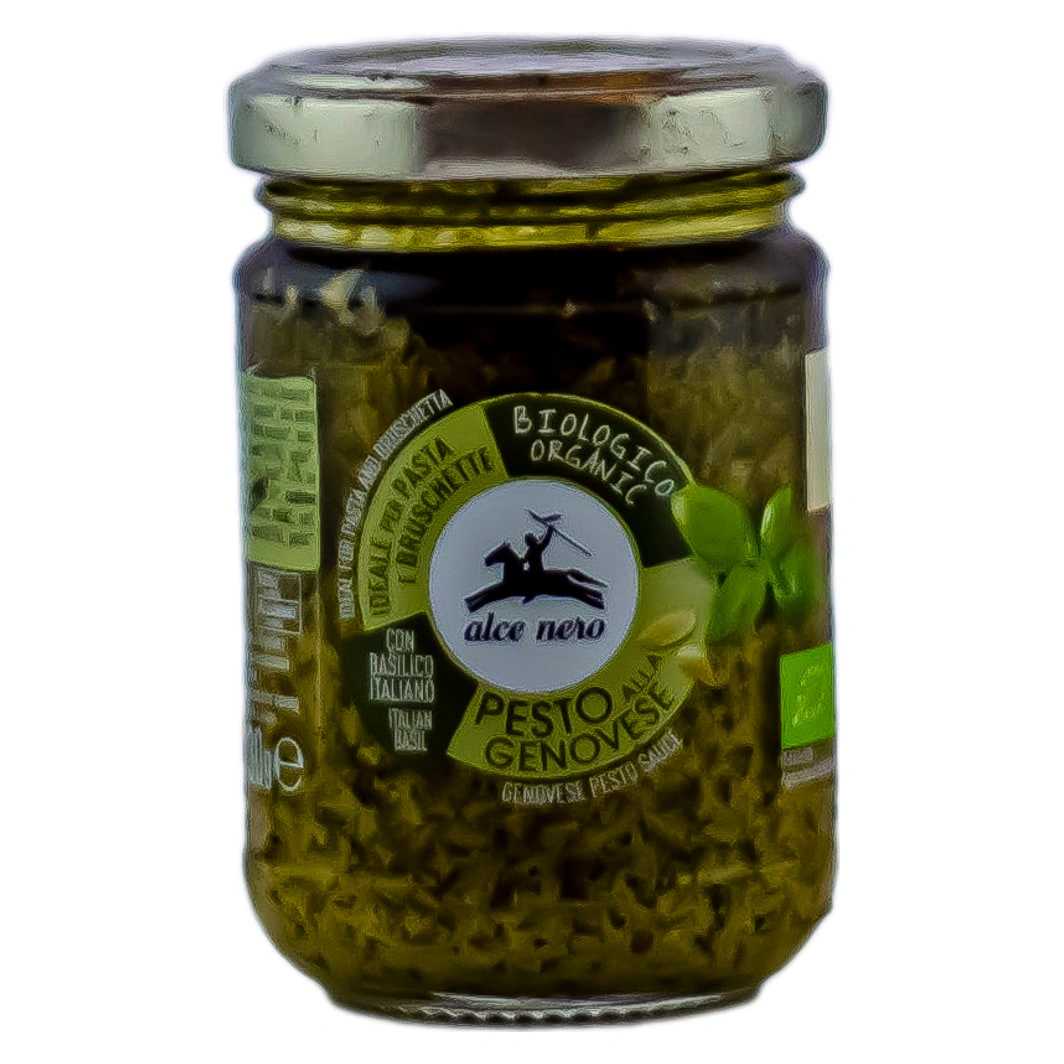
You do not have to make pesto from scratch. A good jarred pesto today is good enough that few people can tell the difference from homemade, as long as you use it properly. I reach for Alce Nero Pesto Genovese, which is organic, made with basil, Parmigiano and Pecorino, and has a short ingredient list.
- 200 g pasta (trofie, penne or linguine)
- half a jar of pesto, about 90 to 100 g
- a handful of freshly grated Parmigiano on top
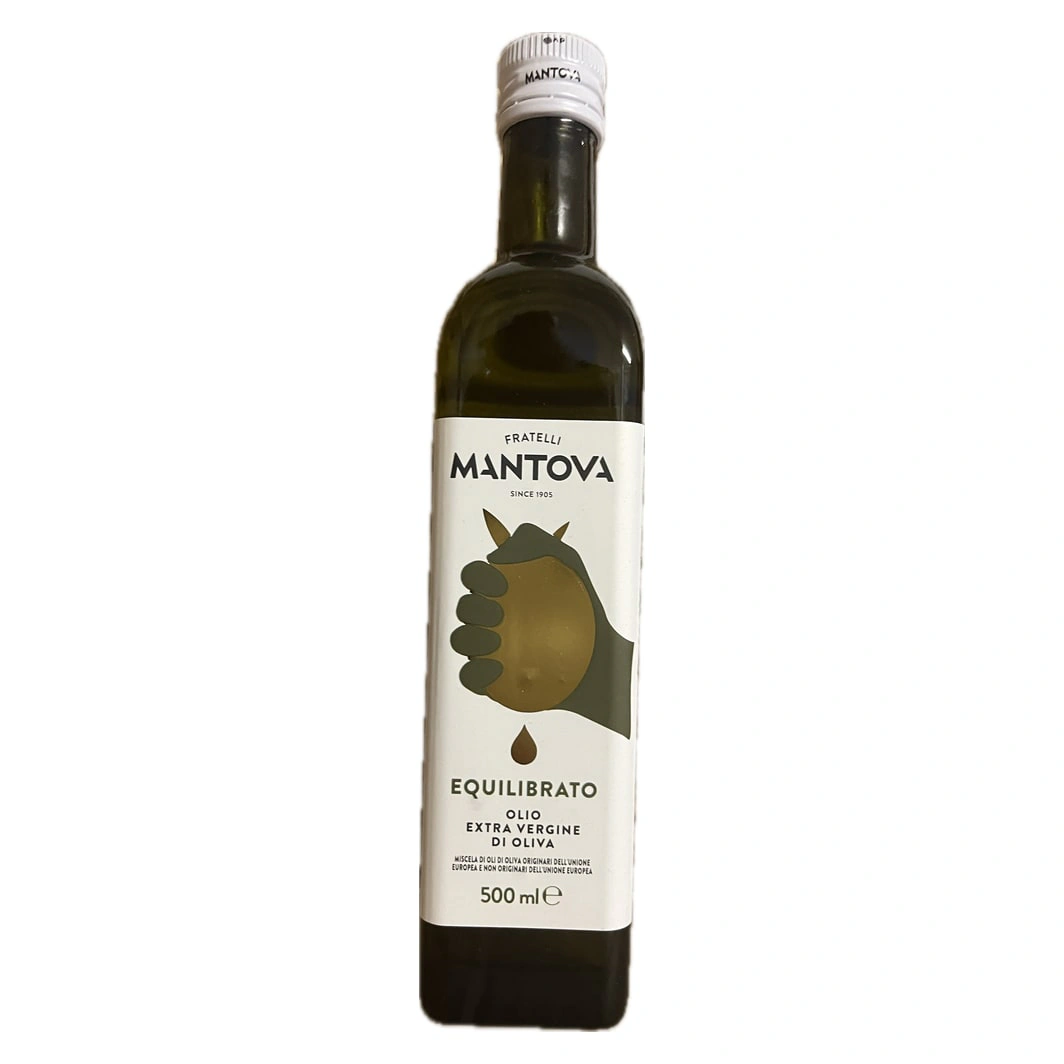
- a spoonful of extra virgin olive oil to finish
- coarse salt for the water
- 1 small potato and a handful of green beans (optional, the Ligurian classic, more below)
- Time: 15 minutes. Serves: 2.
Which pasta to choose
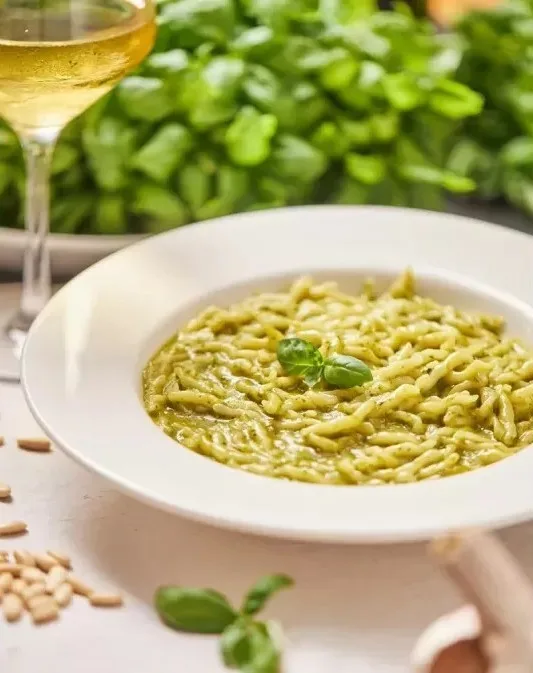
In Liguria pesto is traditionally served with trofie, short twisted pasta that holds the sauce in its folds. Trenette or linguine also work well. The logic is simple: the more surface, the more pesto clings to the pasta.
If you cannot find trofie, use ridged tubes, penne rigate or fusilli. Spaghetti is fine, but pesto slides off it and half of it ends up at the bottom of the bowl.
Cook the pasta al dente, about a minute less than the packet says. It will still be tossed with the pesto and will finish cooking on its own.
Step by step
- Put a large pot of water on to boil and salt it well. It should taste like the sea. This is the only salt in the whole recipe.
- While the water heats, put the pesto into the large bowl you will toss in later. Add a handful of Parmigiano and mix.
- Drop the pasta into the boiling water and cook it a minute less than the packet says.
- Just before draining, scoop out a mug of the cooking water. It is the most important step, so do not pour it away.
- Add two to three spoonfuls of hot starchy water to the bowl of pesto and stir to a smooth cream. The pesto should loosen to the consistency of cream.
- Move the drained pasta into the bowl and toss for 30 to 60 seconds. If needed, add water a spoonful at a time until the sauce starts to shine and clings to every piece.
- Finish with a spoonful of extra virgin olive oil and a little Parmigiano. Taste and serve at once. Pesto does not wait on the plate.
Ligurian bonus: potato and green beans
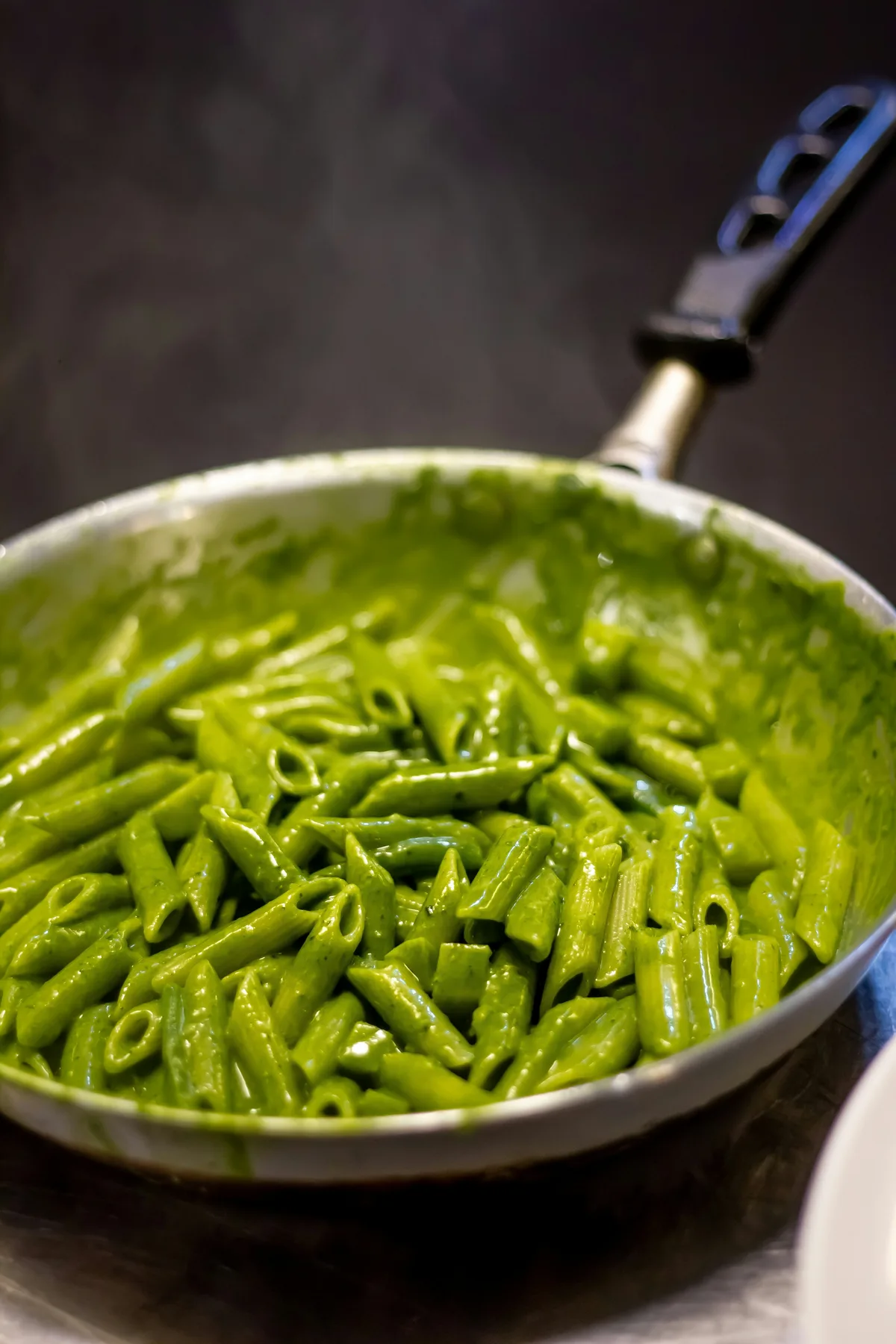
In Genoa, pesto pasta almost always arrives with pieces of potato and green beans in the bowl. It is not a garnish, it is the original. The potato releases starch into the water, which thickens the sauce even more, and the beans add crunch.
Dice a small potato, cut the beans into pieces and cook them in the same water as the pasta. Add the potato to the pot about 5 minutes before the pasta and the beans together with it. You drain everything at once and toss it with the pesto the same way. Try it at least once and you may not want to go back.
What I pour with it
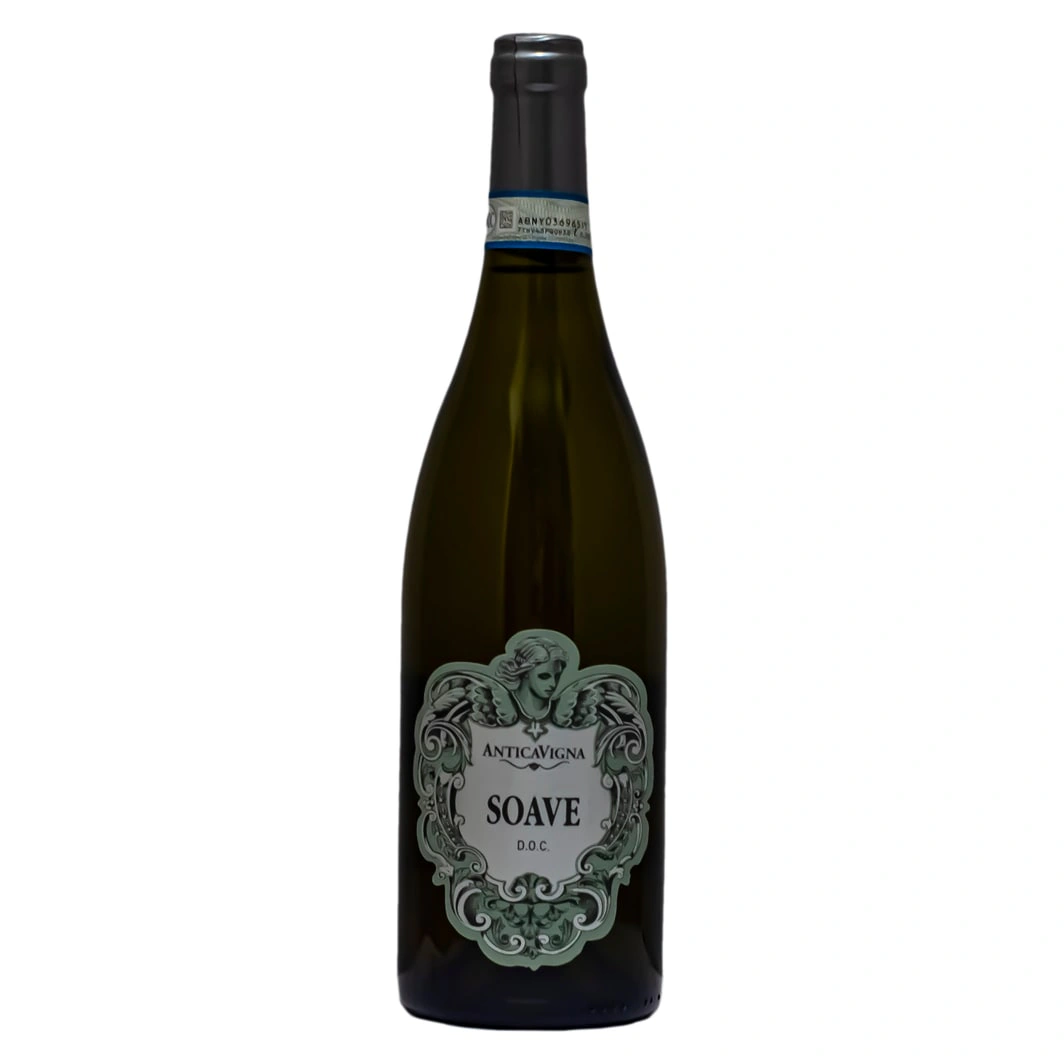
Pesto is herbal, rich and salty, so it needs a wine that cuts through it: a dry, fresh white with enough acidity. In Liguria it would be Vermentino or Pigato. With this plate I also like Soave DOC by Antica Vigna, a dry white from the Garganega grape with a clean finish.
If you prefer red, choose a light, chilled one. A heavy oaked wine would flatten the basil.
Frequently asked questions
- Can I heat pesto in the microwave or in a pan?
- No. Heat destroys the basil and the oil. The pesto warms up on its own from the hot pasta and the cooking water, and that is enough.
- How long does an open jar last?
- About a week in the fridge, but also follow the instructions on the label. Always cover the surface with a thin layer of olive oil so it does not brown from the air. You can divide the rest into an ice cube tray, freeze it and use it by the spoonful.
- Why is the sauce oily and does not hold together?
- The starchy water is missing, or you are not tossing long enough. Add two to three spoonfuls of hot cooking water and toss vigorously. The starch binds the oil and cheese into a creamy emulsion.
- What do I do with leftover pesto?
- Make a pasta salad with pesto and mozzarella. The next day it goes on the table cold and works for a barbecue or a packed lunch.